A tailoring shop holds more customer data than it realises: numbers, measurements, photographs, addresses. What is worth keeping, what should be let go, and how to answer when somebody asks you to delete theirs.
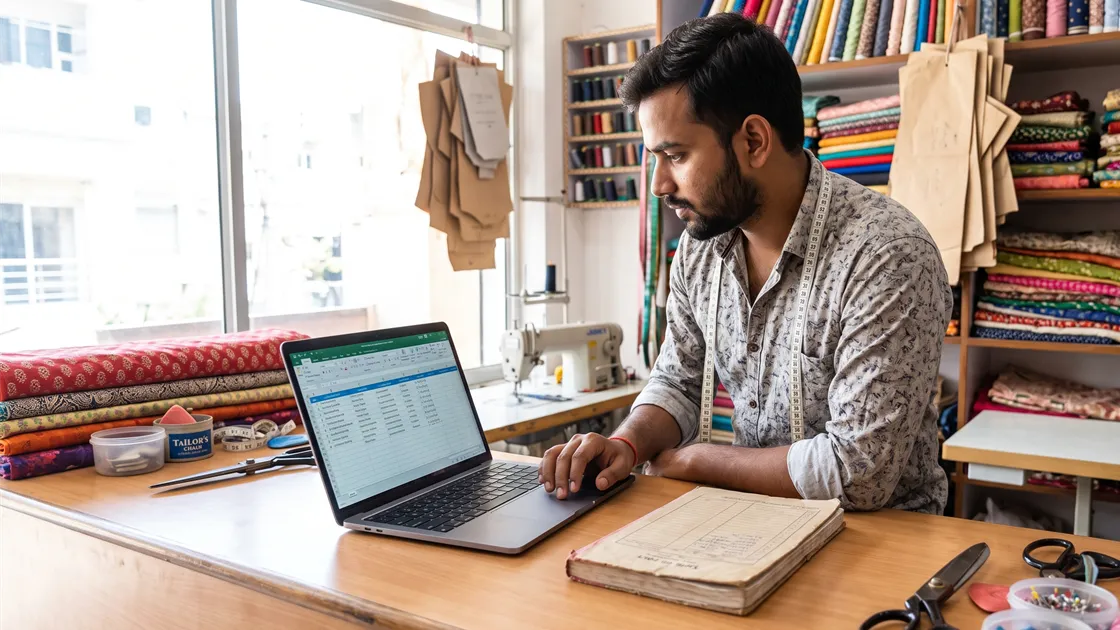
What a Tailoring Shop Actually Holds
Ask an owner what customer data the shop keeps and the answer is usually "just the phone number". Then you look.
There is the name and the number. The measurements — which for a woman are among the more personal numbers anybody writes down about her. The address, if you ever delivered. Photographs of her in a trial fitting, or of the finished garment on her. A WhatsApp history going back two years. What she paid, and when she did not pay on time. Sometimes a copy of an invoice with a GSTIN, sometimes a wedding date.
None of that was collected deliberately. It accumulated, because every single piece of it was useful once. And almost all of it is still sitting on a phone that goes home every evening.
Why It Is Worth Thinking About Now
Two things changed, and neither is about regulators turning up at a tailoring shop.
The first is that customers started asking. A woman who has moved city, or stopped using you, or simply had an argument, now sometimes asks for her details to be removed — and she is used to being able to ask that of every app on her phone. A shop that cannot answer looks careless about something she considers private.
The second is that the data moved from a book to a phone. A register in a drawer is only lost if the shop burns. A phone is lost in an auto, sold with the photos still on it, or handed to a cousin to fix. The exposure is larger and the loss is quieter.
This is not a compliance problem for most shops. It is a trust problem, and trust is the entire reason a woman tells you her measurements in the first place.
What Is Worth Keeping
Name and phone number
The spine of everything. The number is also how you find her record without three spellings of her name, so it earns its place twice.
Measurements, with the date
The most valuable thing you hold and the most personal. Worth keeping for years for a regular, as long as the date is attached so an old figure can be seen to be old.
What you stitched, and her preferences
Garment, date, the neckline she liked, no padding, hooks not zip. This is what makes a customer feel known, and it costs almost nothing to store.
What was billed and what was paid
Keep this for as long as your accountant tells you to keep accounts, which is longer than you would otherwise want. It is a legal record before it is a customer record.
What Should Go
Most of the risk in a shop’s data is in things nobody decided to keep.
Photographs of customers in fittings
Useful for a week, a liability for years. Delete them when the garment is delivered. If you want a picture of the work, photograph the garment on a hanger or a form, not on her.
WhatsApp media, two years deep
Every photo she ever sent, every photo you ever sent, sitting in the phone’s gallery. Clear it periodically. Nothing in there is doing the shop any good after the order is closed.
Addresses you no longer deliver to
Collected for one delivery three years ago and never used again. There is no reason to hold a home address for a customer who collects at the counter.
Anybody who came once, years ago
A one-visit customer from four years ago is not coming back. Her measurements are doing nothing for you and are still her measurements.
Copies of identity documents
Occasionally collected for a large order or a credit account. Unless there is a specific reason to hold one, do not, and if you must, do not keep it on a phone.
When Somebody Asks You to Delete Theirs
This request now arrives a few times a year in an ordinary shop, usually by WhatsApp and usually briefly. How you handle it takes two minutes and is remembered.
Say yes, and say when
Not "I will see". A plain yes and a timeframe — "by the end of the week" — is the whole difference between a reasonable business and an evasive one.
Actually find all of it
The record, the WhatsApp thread and media, the photographs in the gallery, anything on a second phone at the shop. A deletion that leaves the photographs is not a deletion.
Keep the bills
Accounting records have to be kept for a period your accountant will tell you, and that obligation does not disappear because a customer asked. Say so plainly: the measurements and photographs are gone, the invoices stay for the period the law requires.
Confirm when it is done
One message. It closes the matter, and it is the part most businesses skip.
Three Habits Worth Having
None of this needs a policy document. It needs three things to be true about how the shop works.
The data should live somewhere that is not one person’s phone. A phone is a window onto the records, not the place they are kept — so a lost phone is an inconvenience rather than a disaster, and a karigar who leaves does not leave with the customer list in his pocket.
Not everyone should see everything. The person at the counter needs measurements and order history. He does not need what every customer has ever paid, and a shop with staff should be able to make that distinction.
Something should be thrown away, on a schedule. Once a year, clear the fitting photographs, the WhatsApp media and the customers who came once and never returned. A shop that only ever adds is a shop whose exposure only ever grows.
Frequently Asked Questions
What customer data does a tailoring shop need to keep?
Name and phone number, measurements with the date taken, what you stitched and her preferences, and the billing record. Everything else — fitting photographs, old addresses, years of WhatsApp media — is accumulation rather than need.
Should I keep photographs of customers in fittings?
Delete them once the garment is delivered. If you want a picture of your work, photograph the garment on a hanger or a dress form instead. A fitting photograph is useful for a week and a liability for years.
What do I do if a customer asks me to delete her details?
Say yes, give a timeframe, and find all of it — the record, the WhatsApp thread and media, and any photographs. Bills have to be kept for the period your accountant specifies, so say that plainly. Then confirm when it is done.
Is it safe to keep customer measurements on a staff phone?
Only if the phone is a window onto records held centrally, rather than the place they live. A phone that is the only copy takes the customer list with it when it is lost, sold or handed to somebody to repair.
Where Juvee Helps
Customer records held centrally rather than on one person’s phone, with measurements, history and preferences in one place and visible to the people who need them. That is what customer records are for, and it is also what makes a deletion request answerable in two minutes. Juvee’s Basic plan is free with no time limit, and paid plans start at ₹10,190 a year including GST — see the pricing page. Juvee’s own privacy policy sets out what we hold and for how long.