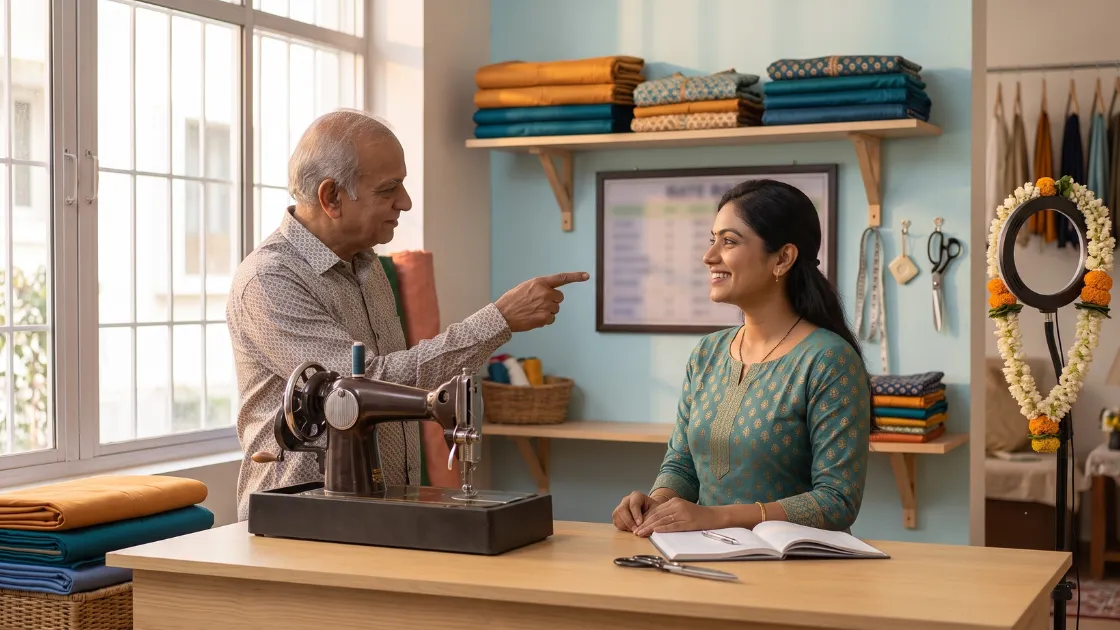
"Blouse ka kitna?" You say Rs. 350 — because that is what you said last year, and the year before. Undercharging is a slow leak: just Rs. 50 too low on 150 garments a month is Rs. 90,000 gone in a year.
A proper tailoring rate card plugs that leak. Not a number copied from the shop next door — a card built from your costs, printed, and defended with a smile. Here is the maths.
First, Know Your Real Cost Per Garment
Take one lined blouse and count everything:
| Cost Item | Amount |
|---|
Thread, hooks, small materials | Rs. 20 |
Lining / astar | Rs. 70 |
Karigar piece-rate | Rs. 150 |
Overhead per garment | Rs. 80 |
| True Cost | Rs. 320 |
Overhead per garment is your monthly fixed cost divided by monthly garments. Example: rent Rs. 9,000 + electricity Rs. 1,500 + misc Rs. 1,500 = Rs. 12,000, spread across 150 garments = Rs. 80 each.
Now price it: cost × 1.5 to 1.8, which puts this blouse at Rs. 480–575. Charge Rs. 350, and your skill earns Rs. 30. That is the leak, in one line.
One more trap: if you stitch yourself, pay yourself the piece-rate anyway. Rs. 150 of your time is not free — a card built on "free" labour collapses the day you hire a karigar. Repeat this costing for each garment on your card; a kurti and a safari suit do not share the same maths.
A Sample Tailoring Rate Card (Adjust for Your City)
Working 2026 ranges — starting points, not gospel. Adjust for your city, your finish quality and your reputation:
| Garment Type | Tier-2 / Tier-3 City | Metro City |
|---|
Blouse (lined, simple) | Rs. 350–500 | Rs. 600–1,000 |
Designer blouse (princess cut, piping) | Rs. 600–1,200 | Rs. 1,200–2,500 |
Kurti (plain) | Rs. 300–550 | Rs. 550–1,000 |
Salwar suit (full set) | Rs. 450–800 | Rs. 800–1,500 |
Shirt (gents) | Rs. 400–700 | Rs. 700–1,200 |
Trousers | Rs. 450–800 | Rs. 800–1,400 |
Saree fall & pico | Rs. 60–120 | Rs. 100–250 |
State what each price includes: one fitting and one minor adjustment within seven days. Inclusions printed on the card prevent arguments later.
Charge for Urgency — It Is Real Capacity
An urgent order pushes other work aside. That has a price:
- • Same-day or 24-hour delivery: +50% surcharge
- • Two-to-three-day delivery: +25% surcharge
- • Festival-week bookings after cutoff date: +20% surcharge
Print these on the tailoring rate card itself. When the surcharge is policy on paper, it is not a negotiation at the counter — and customers who genuinely need speed pay it without fuss.
Revise Once a Year, Before the Rush
Lining, thread and karigar rates rise every year; a frozen card means your margin quietly shrinks. Revise 8–12% annually, announced two to three weeks before festival season on your WhatsApp status and counter board. Honour every already-booked order at the old rate.
One line does the whole job: "New rates from 1 September — bookings before that at current rates." That message fills your order book, too.
Say Your Price Without Losing the Customer
- • Laminate the card at the counter and keep a PDF ready to send on WhatsApp — a written rate is respected; a spoken one is negotiated.
- • When someone says the market tailor is cheaper, agree politely, then explain the difference: proper lining, one free adjustment, delivery on the promised date. Offer your basic tier; never invent a secret discount.
- • Reward regulars with perks, not price cuts. Free fall-pico on the third order beats Rs. 50 knocked off forever.
- • If you are GST-registered, show the stitching charge and tax separately on the bill. Clean bills build trust — see GST billing for tailors.
Pricing with a system is half the game. Growing on top of it is the other half — our guide on how to grow a tailoring business picks up from here.
Frequently Asked Questions (FAQ)
What is a fair blouse stitching charge in 2026?
Roughly Rs. 350–500 in tier-2/3 cities and Rs. 600–1,000 in metros for a simple lined blouse, with designer work well above that. Your exact number should come from cost × 1.5–1.8, not from the shop next door.
How much extra should I charge for urgent stitching?
+50% for 24-hour delivery and +25% for two-to-three-day delivery is a fair, widely accepted structure. Print it on your tailoring rate card so it reads as policy, not mood.
How often should stitching rates be revised?
Once a year, by 8–12%, announced before festival season — with old rates honoured for orders already booked.
Automate Your Rate Card with Juvee
Build the rate card once inside Juvee and billing stops being mental maths: pick the garment, the rate fills in, urgent surcharges apply themselves, and GST shows correctly. All of it costs Rs. 10,190/year — details at juvee.in/pricing. Start with the free Basic plan at juvee.in/free-trial (no card needed) or get the Juvee tailor app on Google Play.
🔗 Related Resources & Quick Links