Fabric wastage is the cost nobody puts on the bill, because the cloth has already been paid for. Where it actually goes in a tailoring shop, and the changes at the cutting table that stop it.
The Loss You Never See on Paper
A shop that buys cloth knows what it spent. What it does not know is how much of that cloth became a garment and how much became the pile under the cutting table.
The figure is larger than most owners guess. On ordinary work, ten to fifteen per cent of a length goes in offcuts, and on patterned or one-way cloth it can reach twenty-five. On a shop turning over cloth worth two lakh a year, that is twenty to thirty thousand rupees walking out in a sack — money already spent, on which nothing was earned.
It never appears as a loss because there is no moment where it is paid out. It leaves in pieces, a handspan at a time, and the only sign is that the cloth ran out sooner than it should have.
Where It Actually Goes
Waste is not one problem. It is four, and they need different answers.
Laying out one garment at a time
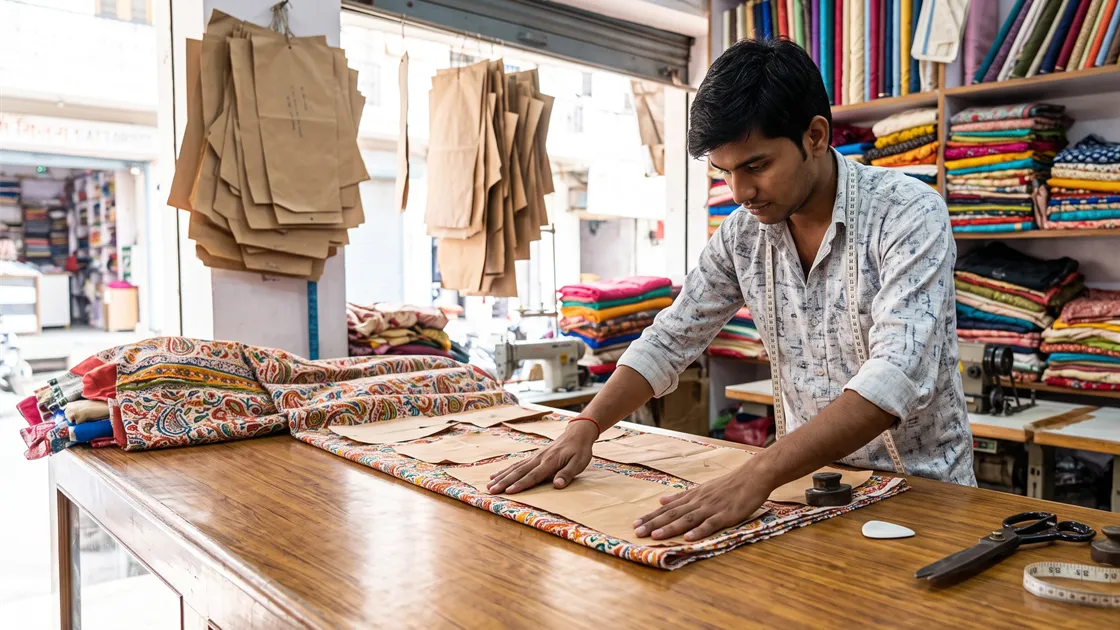
Cutting a blouse, then a second blouse, then a third, each from its own fresh start, leaves a gap at every edge. Laying all three before cutting any lets the pieces interlock, and the same cloth gives three garments and a usable remainder instead of three garments and scrap.
Cutting with the wrong allowance
Too little and the garment cannot be let out later; too much and every seam carries cloth that will be trimmed and thrown. A standard allowance written on the wall, rather than each cutter’s own habit, settles this.
Pattern and nap, discovered late
A one-way print or a nap means every piece must face the same direction. Noticed before laying out, it costs fifteen per cent more cloth and you plan for it. Noticed after cutting two pieces, it costs the length.
Shrinkage after stitching
Cloth that was not pre-shrunk comes back from the first wash smaller, and the remake uses a second length. This is the most expensive waste of all because it also costs the labour.
What Changes at the Cutting Table
None of this needs new equipment. It needs the order of operations to change.
Lay out everything before cutting anything
Place all the pieces for the garment — and if you can, for the next garment too — on the cloth before the scissors come out. Move them around. The two minutes spent arranging is the single largest saving available.
Put the big pieces down first
Front, back, skirt panels. The small pieces — collars, cuffs, facings, pockets — fit into the gaps the large ones leave. Done the other way round, the large pieces will not fit and the length grows.
Check the direction before the first cut
Hold the cloth up. Does the print run one way? Does the pile change colour when you stroke it? Thirty seconds, and it decides the entire layout.
Keep paper patterns for what you make often
A shop that cuts the same four blouse shapes all year is redrawing them by hand every time. A paper or card pattern is cut once, is identical every time, and can be laid out and shuffled in a way a chalk line cannot.
Cut the lining from the leftovers, not from a new length
Facings, pockets, collar stands and interlining pieces are small. They should be coming out of the offcut pile, not off the roll.
What to Do With the Pile
Some waste is unavoidable, and a shop that throws all of it away is giving away usable cloth. Sort the pile once a week into three.
Pieces over about half a metre go back on the shelf as short lengths — they will make a blouse, a child’s frock or a set of facings. Pieces between a handspan and half a metre go into a box for pockets, collar stands, patch repairs and samples. Below that, it is genuinely scrap, and scrap cotton sells by weight to cleaning-cloth buyers in most towns. Not much money, but better than paying to have it taken away.
The sorting only works if it happens weekly. A pile that is left for a month becomes a pile nobody wants to touch, and the whole lot goes out together.
Measuring It, So You Know If Anything Changed
Every shop believes it is careful with cloth. The only way to know is to count, and counting needs just two numbers.
Record what each garment type actually consumes — not what the chart says it should, what yours does. After a month you will have a real figure for a blouse, a kurti, a churidar. Compare that to the standard requirement and the gap is your wastage, in metres, per garment.
That number is also what tells you whether a change worked. Lay out in pairs for a fortnight, measure again, and either the figure moved or it did not. Without the first number, every improvement is a feeling.
It is the same discipline as counting what is on the shelf. A shop that knows what cloth it holds and what each garment consumes can order the right length instead of the length that felt safe.
Cloth the Customer Brought
Everything above assumes the cloth is yours. When the customer brought it, wastage stops being a cost and becomes an argument, which is worse.
She bought three metres because the shop told her three metres. If your layout needs 3.2, the conversation happens after she has paid for the cloth and chosen the design. And if you cut carefully and half a metre is left over, she will often want it back — for a matching blouse, a child’s frock, a patch for later.
Two habits cover both. Measure the piece on the counter before accepting the order and say the figure out loud, so a shortfall is known before anything is cut. And ask, at the same moment, whether she wants the leftovers returned, and write the answer on the slip. Neither takes a minute, and between them they remove the two complaints that customer-supplied cloth actually produces.
Frequently Asked Questions
How much fabric wastage is normal in a tailoring shop?
Ten to fifteen per cent on plain cloth with careful layout. Patterned, one-way or napped cloth runs higher — up to twenty-five per cent — because every piece must face the same direction. Consistently above that points at layout rather than at the cloth.
What is the single biggest cause of fabric waste?
Cutting one garment at a time. Laying out two or three together before any cutting lets the pieces interlock, and on repeat work it is usually worth more than every other change combined.
Should leftover cloth be kept or thrown?
Sort it weekly. Over half a metre goes back on the shelf as a short length. Between a handspan and half a metre goes in a box for collars, pockets and facings. Smaller than that is scrap, which sells by weight in most towns.
How do I know whether my wastage is improving?
Record what each garment type actually consumes for a month, then compare it with the standard requirement. That gap is your wastage. Change one thing, measure again, and the figure either moved or it did not.
Where Juvee Helps
Knowing what each garment really consumes, and what is on the shelf before you order more, is the part a notebook cannot keep up with. Juvee tracks it as you go — see fabric inventory, and garment production for what each batch used. The Basic plan is free with no time limit, and paid plans start at ₹10,190 a year including GST; every plan is on the pricing page. If shrinkage is where your cloth goes, start with testing whether the cloth shrinks.