Every shop has that rack at the back. Finished work, part paid, and the customer never came. Here is how to clear it and stop it filling again.
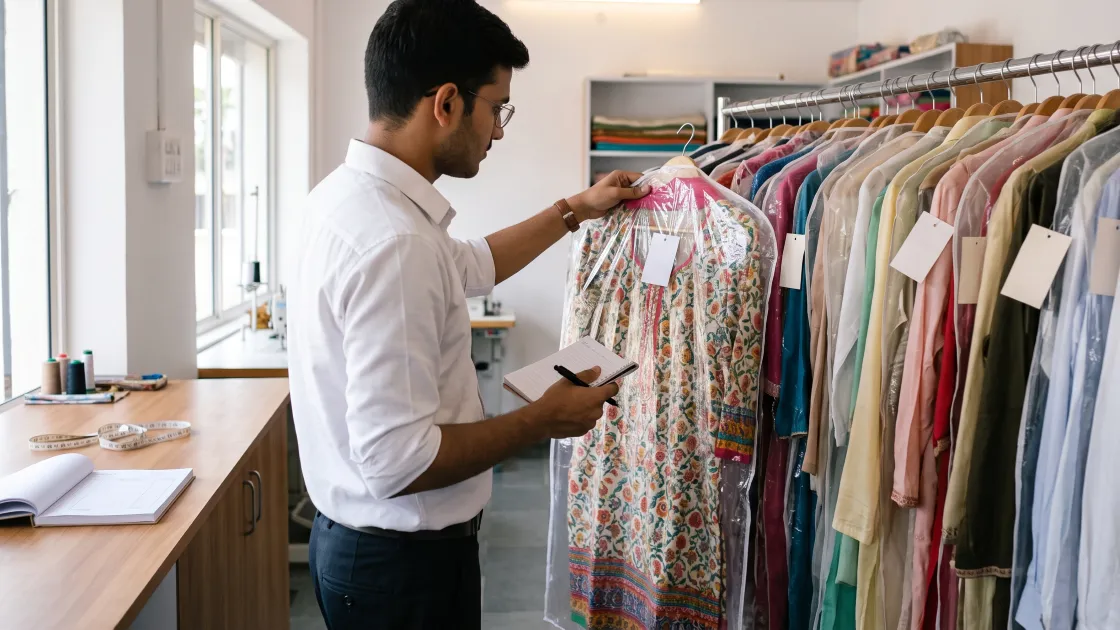
What That Rack Actually Is
It looks like cloth. It is not. It is three separate losses standing in one place.
- Money you earned and were never paid. The work is done, the balance is outstanding
- Materials you already bought. Lining, thread, buttons, packing - paid for, gone
- Space, and the hours it takes to move that rack every time you need to reach behind it
Most owners think of it as an annoyance. It is closer to a small loan the shop has given out, one garment at a time, without meaning to and without a date.
An uncollected garment is not stock. It is an unpaid bill wearing a cover.
Clear the Rack First
Before changing anything about how orders are taken, deal with what is already there. One evening.
- Take every uncollected garment off the rack and lay it out
- For each one write: customer name, phone, what it is, what was paid, what is owed, and the date it was finished
- Sort the list by amount owed, largest first
- Add up the "owed" column. That total is the size of the problem, and it is usually a surprise
Now you have something you did not have before: a list, in order, with phone numbers. Everything after this is just working down it.
How to Make the Call
This is where most owners stop, because it feels like begging for money. It is not - the customer usually just forgot, and the garment is theirs. Say it plainly and warmly.
Something close to: "Madam, your blouse has been ready since the fourteenth and it is here waiting. Shall I keep it for you this week?" No mention of money in the first message. Most people come, and pay the balance when they do.
If there is no answer, one message a week for three weeks, then stop. Chasing beyond that costs you more in irritation than the garment is worth, and the list will tell you who is genuinely gone.
On collecting balances generally, see tailor shop accounts.
Why It Happens
Four causes, in the order they show up.
| Cause | What it looks like |
|---|
She was never told it was ready | No call was made, or it was made to a number written down wrong |
The date passed quietly | Promised "next week", nobody said which day, and next week never arrived |
She paid nothing at the order | With no advance there is nothing pulling her back |
The garment is not right | She came, tried it, it needed altering, and she never returned |
The fourth one is the one worth thinking hardest about. A garment that comes back for alteration and then disappears is usually not a forgetful customer. It is a fit problem nobody wanted to discuss, and the customer is gone for good rather than just late.
Four Habits That Stop It
Take an advance, always
Even a small one. A customer who has paid nothing has no reason to hurry, and a customer who has paid something almost always comes. This one habit removes most of the rack on its own.
Write a real date, not "next week"
A day and a date on the bill, said out loud at the counter. "Ready on Thursday the twelfth." Vague dates produce vague customers.
On what a bill should carry, see the tailor bill format.
Tell her the day it is finished
Not the day it was promised - the day it is actually ready. One message. This is the single most effective habit on this list, because the largest cause of an uncollected garment is a customer who does not know it is waiting.
On using WhatsApp for this, see WhatsApp for tailor shops.
Look at the rack every Saturday
Ten minutes, once a week. Anything sitting more than fourteen days gets one message. A rack checked weekly never becomes a rack nobody wants to look at.
Put the Term on the Bill, in Advance
Shops often ask how long they must keep a garment and what they may do with it afterwards. The honest answer is that it depends on your state and on what the customer agreed to, and it is not something to decide from an article.
What every shop can do is agree it up front. A line printed on the bill - how long the shop holds a finished garment, and what happens after that - means the customer was told at the time, in writing. Have the wording checked once by a local advocate, print it, and the question never has to be argued at the counter.
Do not sell, alter or dispose of a customer’s garment on the strength of an article, this one included. Cloth she brought is her property, and a rule you never told her about is not a rule she agreed to.
When the Rack Is Empty
Clearing it is a good week. Keeping it clear is what actually changes the shop, and the difference is one number: how many garments are sitting finished right now. If you can answer that in ten seconds, it will never build up again. If you have to walk to the back and count, it will.
On knowing what is at which stage, see tailor order tracking.
Frequently Asked Questions
What should I do with garments customers never collect?
Make a list with names, phones and balances, message each customer once a week for three weeks, and keep the rest. For anything beyond that, put a holding period on your bill from now on and have the wording checked locally, because what you may do with unclaimed goods depends on your state and on what was agreed.
How long should a tailor keep an uncollected garment?
Long enough that no honest customer loses her cloth, and stated on the bill so nobody is surprised. There is no single national answer, which is exactly why it belongs on the bill rather than in your head.
Should I charge for late collection?
Only if it was said at the order and printed on the bill. Introducing a charge after the fact turns a forgetful customer into an angry one, and in a town where customers talk that costs more than the garment.
How do I stop garments piling up?
Take an advance, write a real date, message the customer the day the work is finished, and look at the rack every Saturday. The message on the day of completion does most of the work.
Can software fix this?
It can tell you what is finished and not collected, and who owes what, in one list instead of a walk to the back of the shop. It cannot make the call. Shops that clear the rack are the ones where somebody looks at that list every week.
For order stages and what is ready, see tailor order tracking.
For balances and who owes what, see tailor shop accounts.
For getting customers to come back at all, see repeat customers for tailors.
Plans and what each includes are on the pricing page.
Do the Count This Saturday
Walk to the rack and count what is on it. Write the number down. That number is the only one that matters, and watching it fall week by week is the whole job.
You can start free on the Basic plan - ten customers, twenty orders a month, no card.