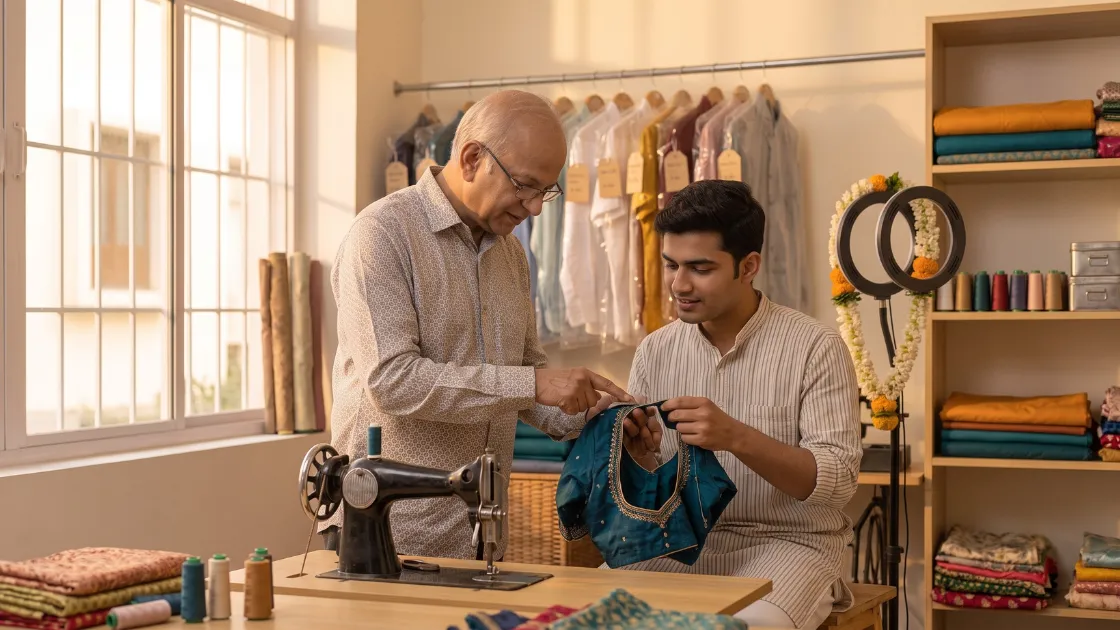
The Real Shortage Is Skill — Treat It That Way
Every shop owner says the same thing: good karigars are hard to find. Fewer young people are entering the trade, and the best masters have their pick of shops. So retention beats recruitment.
What keeps a skilled karigar for years:
- Pay on the promised day, every time: Nothing breaks trust faster than "next week".
- Steady work in lean months: June and July are quiet. The shop that gives even 60% work then keeps its team for Diwali.
- Respect in front of customers: Call him masterji at the counter. It costs nothing.
- Skill growth: Let your shirt karigar learn blouse work. He earns more; you get flexibility.
A karigar who stays five years knows your regulars' fitting quirks by heart. That knowledge walks out the door with him.
Piece-Rate, Salary or Hybrid: Do the Maths
| Model | How it works | Best for |
|---|
| Piece-rate | Fixed rate per garment | Fast, experienced karigars; variable order flow |
| Monthly salary | Fixed pay, any workload | Cutting masters, trusted seniors, steady shops |
| Hybrid | Small base + rate above a target | Balancing loyalty and output |
Take Ravi, a blouse karigar. Rates below are illustrative — ask two or three nearby shops and adjust for your city:
- Piece-rate: Rs. 120 per blouse. At 5 blouses a day for 25 days, that is 125 blouses = Rs. 15,000. In festival months he pushes to Rs. 19,000. In a lean month he may drop to Rs. 9,000 — and start looking elsewhere.
- Salary: Rs. 14,000 flat. He stays in lean months, but October output does not rise on its own.
- Hybrid: Rs. 8,000 base + Rs. 80 per blouse beyond 50 in the month. At 125 blouses he earns Rs. 8,000 + Rs. 6,000 = Rs. 14,000. Normal months match salary, festival months beat it, lean months still pay the base.
One warning: piece-rate only works if piece counts are accurate. A disputed count on payday poisons the whole workshop. Job cards fix this — more below.
Attendance Without Policing
A four-karigar shop does not need biometric machines and warnings. It needs a fixed opening time and a simple daily in-out record — a register or a phone-based check-in on a staff attendance app.
The trick is framing. Attendance protects the sincere karigar: his extra Sunday before Diwali is on record, so his festival bonus argument makes itself. When someone develops a late pattern, show the record and ask what is going on at home. Data opens a conversation; accusation starts a fight.
Job Cards: Who Stitches What, By When
Every order should become a job card containing: garment type, measurement reference, fabric details, special notes (lining, fall-pico, sleeve style), trial date, delivery date, karigar name, and rate. Then allocate with two rules:
- Match skill to stakes: Bridal blouses go to your master. School pinafores go to the junior.
- Balance the load: Do not pile every urgent job on your fastest man. He burns out; the others coast.
On paper this is a pinned slip on each bundle. With digital job cards, each karigar sees his queue on his phone, you see who is overloaded, and finished pieces total themselves for payroll. Payday becomes a printout, not a debate.
Quality Gates Before Delivery
Three quick checks catch almost every remake:
- After cutting: Pieces against the measurement chart, before stitching starts.
- After stitching: Seams, lining, fall-pico done, hooks aligned.
- Before packing: Pressing, loose threads clipped, the customer's name on the cover.
Each gate takes two minutes. A remake after the customer complains takes two days and a little of her trust. Track remakes per karigar per month — not to punish, but to train. Under two remakes per hundred garments is a healthy shop.
Plan Festival Overtime in August, Not October
Capacity maths first: 3 karigars × 5 blouses a day × 25 days = 375 blouses a month. If last Diwali brought 500, you have a 125-piece gap. Close it now, in August:
- Book only up to capacity, with a clear last-order cutoff date on your WhatsApp status.
- Line up a temporary karigar through your masters' network this month. By October, everyone good is taken.
- Offer 20–25% higher piece-rates for evening overtime work. An extra 100 blouses at Rs. 150 costs Rs. 15,000 against roughly Rs. 40,000 in stitching revenue.
- Shift fall-pico and hemming to a part-time helper so karigars stitch, not finish.
Staff management in tailoring is seasonal maths. Do it before the rush, and the rush pays you.
Frequently Asked Questions (FAQ)
Q: What is a fair piece rate for a karigar?
A: It varies by city and garment. As a working range, simple blouses run Rs. 100–180, salwar suits Rs. 150–250, and gents shirts Rs. 100–200 per piece in many tier-2 markets. Ask two or three nearby shops before fixing yours, and revise once a year.
Q: Is piece-rate or monthly salary better for tailor staff?
A: Piece-rate rewards speed, salary rewards loyalty. Many shops land on a hybrid — a modest base plus a per-piece rate above a monthly target — so karigars are protected in lean months and motivated in peak months.
Q: How do I track karigar attendance without cameras?
A: A fixed opening time plus a simple daily in-out record is enough for small shops. Keep it visible to everyone, and use it to credit extra hours, not just to question late marks.
Try This With Juvee
Streamline Your Karigar Management with Juvee
Juvee puts karigar management on one screen — job queues per karigar, automatic piece counts, attendance, and payroll together.
• Try it free with no time limit: juvee.in/free-trial (No credit card needed; Rs. 10,190/year for the whole shop thereafter).
• Download on Google Play: The Juvee tailor app is on Google Play, so your masters see their work list right at the machine.
Related reading