Seasonal Tender Calendars, Size-Set Maths, Costing Slabs, and Long-Term School Account Management
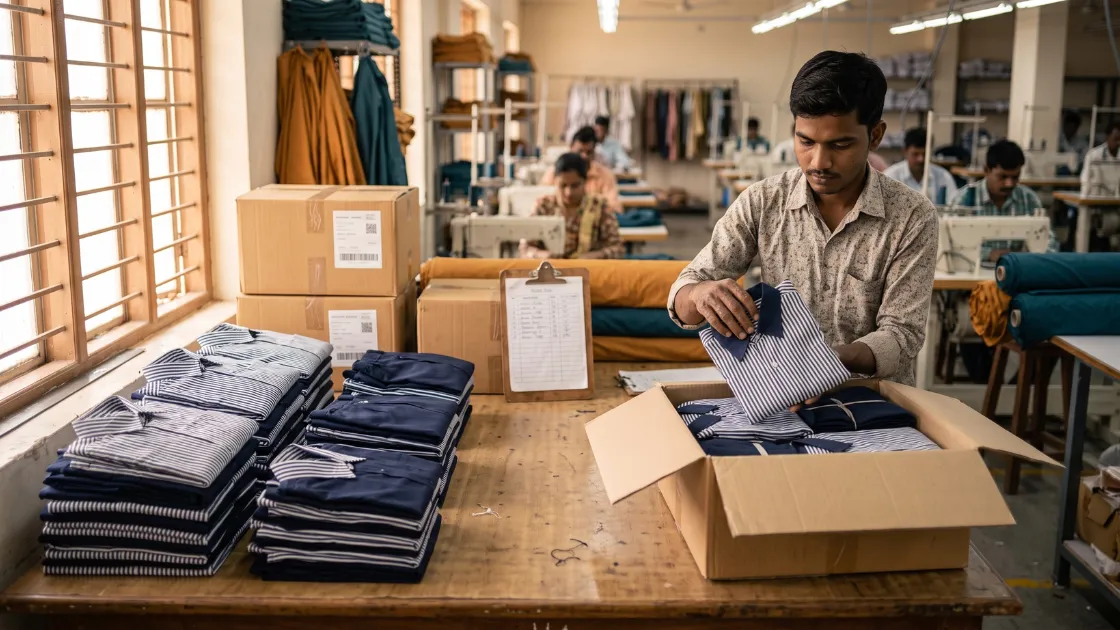
One school of 1,000 students is worth more than a season of walk-in customers.
Two sets per child is 2,000 shirts and 2,000 bottoms in a single order — and the same order again next year, if you deliver on time. That is why school uniform manufacturing is the steadiest bulk business a stitching unit can build. It is also unforgiving: schools reopen on a fixed date, and a late uniform maker is an ex-uniform maker. Here is the business, end to end.
The Uniform Year Runs on a Calendar
- Nov–Jan: Approach schools with a sample set and rate sheet. Decisions happen now.
- Jan–Mar: Tenders and tie-ups close, rates are fixed, fabric gets booked.
- Mar–May: Production. Your unit's busiest, most disciplined months.
- May–Jun: Delivery before reopening. The date that makes or breaks you.
- Jul–Sep: Top-up orders for new admissions and growth spurts.
- Oct: Review meeting with the school; carry size data into next year's quote.
Critical Seasonality Rule
Miss the November-to-January window and you wait a full year. If you are entering this business, start visiting schools this winter, not next summer.
Quoting a Bulk Order: The Size-Set Maths
Never quote from a single sample shirt. Fabric consumption changes with size — a size 22 shirt takes about 0.9 m, a size 40 takes about 1.4 m — so your true cost depends on the size ratio. Work from the weighted average.
Example cost sheet for 2,000 shirts (illustrative — adjust for your fabric and city):
| Cost Head | Cost Per Shirt |
|---|
Fabric, 1.15 m average @ Rs. 90/m | Rs. 104 |
Stitching (piece-rate) | Rs. 40 |
Trims — buttons, thread, labels | Rs. 8 |
Checking, pressing, packing | Rs. 6 |
Overheads — rent, power, transport | Rs. 12 |
Total Direct & Overhead Cost: Rs. 170 per shirt.
Add a 15% margin and you quote about Rs. 195–200 per shirt — roughly Rs. 4 lakh for the shirt half of the order. Quote trousers, pinafores and ties the same way.
Where schools allow, quote in two size slabs (up to class 5, and above) so the big sizes stop eating your margin. And build one price revision per year into the agreement — fabric rates will not wait for you.
Size-Ratio Planning: Cut the Bell Curve
Bulk uniform orders fail on sizes, not stitching. Cut too many size 24 and too few size 30 and you finish "complete" yet undelivered.
For 2,000 shirts across sizes 22–36, a typical distribution looks like this: 4% / 8% / 14% / 20% / 20% / 16% / 10% / 8% — that is 80, 160, 280, 400, 400, 320, 200 and 160 pieces.
Three rules make the ratio safe:
- 1. Historical Data: Use last year's issue register if the school has one — real data beats any formula.
- 2. Sample Class Measurement: Otherwise, measure one sample class per age band before cutting.
- 3. Safety Margin: And cut 2–3% extra in the middle sizes (28–32); they always run out first.
For the two or three unusually tall or broad students every school has, stitch to order instead of guessing.
Delivering 2,000 Pieces Without Chaos
A 2,000-piece order managed loosely becomes a floor full of mystery stacks. Managed in batches, it is just 80 bundles of 25:
- Bundle Tracking: One job card per bundle — size, quantity, karigar, dates in and out.
- Daily Board: A daily board with three counts: cut, stitched, packed, against the plan.
- Quality Gate: A quality gate before packing — collar, buttons, hem, and the size label checked on every piece.
- Class-Wise Packing: Cartons packed class-wise, the way the school distributes, never size-mixed.
- Two-Lot Delivery: Delivery in two lots: 80% before reopening day, 20% as a buffer in week one.
With digital job cards, those 80 bundles update from the supervisor's phone, and you see the whole school uniform order move from cutting to cartons without walking the floor.
Keep the School for Ten Years
The first order is won on price. Every order after that is won on reliability:
- On-Time Guarantee: Deliver before reopening day, every single year. No excuses in year three.
- Rapid Top-Ups: Promise 7-day top-ups for new admissions — hold back about 5% of fabric as reserve.
- Counter Stock: Keep spare stock of fast-moving sizes at your counter or the school's store.
- Annual Review: Hold an October meeting: which sizes ran short, fabric feedback, next year's rates.
- Data Retention: Store the school's size ratios and measurement records permanently. Next year's quote then takes an hour, not a week.
A school retained for a decade is 20,000+ garments from one relationship. Guard it like a bride's trousseau order.
GST on School Uniforms
Uniforms are readymade garments under GST, and stitching done as job-work has its own rate structure under SAC 9988. Readymade garments attract GST based on price slab thresholds (e.g., 5% or 12%), while job-work tailoring services are taxed separately. Confirm current rate slabs with your chartered accountant to ensure precise invoicing.
Schools and their management societies expect proper GST invoices with accurate HSN/SAC codes. Bill cleanly from day one to maintain institutional trust.
Frequently Asked Questions (FAQ)
How do I get school uniform manufacturing orders?
Shortlist private schools nearby and meet the administrator between November and January with a stitched sample set and a size-slab rate sheet. One school delivered perfectly becomes your reference; principals talk to other principals.
What is the GST rate on school uniforms?
Readymade garments attract GST by price slab, while job-work stitching is taxed under SAC 9988. Confirm current applicable rates with your CA and state them clearly on institutional school invoices.
How much extra should I cut per size?
Cut 2–3% extra in the middle sizes (28–32), which run out first, and almost no extra in the smallest and largest sizes. Stitch outliers to order, and save each school's actual ratio for next year.
Try This With Juvee
Uniform makers run their whole season on Juvee — bulk orders broken into batch job cards, size-wise counts, GST invoices and each school's size history saved for next year's quote.
It is Rs. 10,190/year, on top of a Basic plan that is free with no time limit at juvee.in/free-trial. Book a demo at juvee.in/book-demo before tender season, and put the Juvee tailor app from Google Play in your supervisor's pocket.
Related reading