High-Margin Niche Blueprint: Low Startup Costs, Rate Cards, 24-Hour Turnarounds, and Digital Ticketing
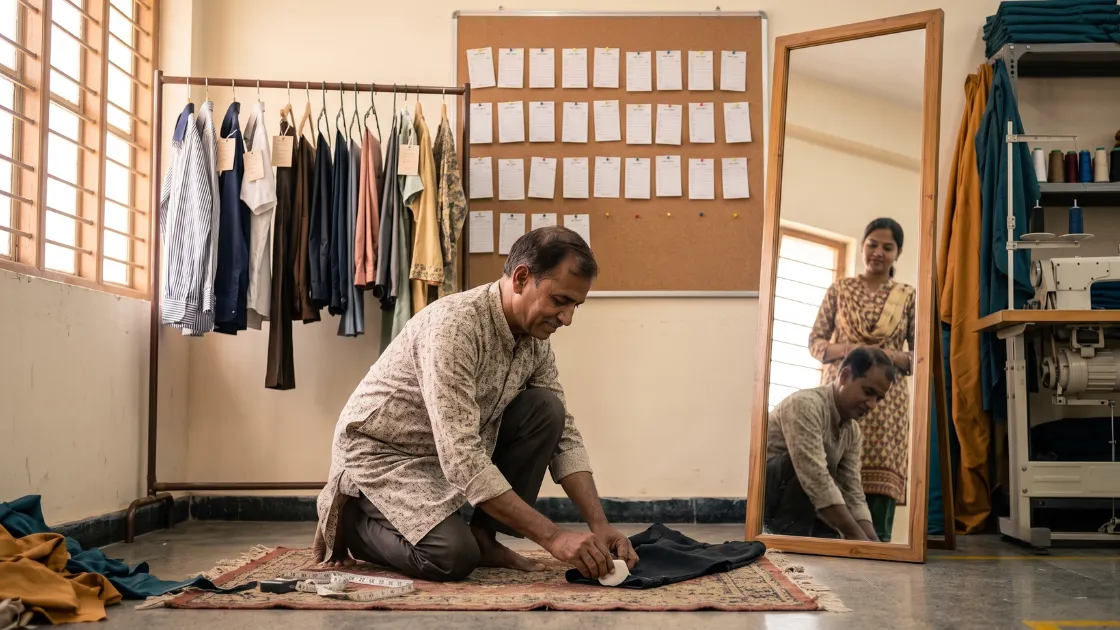
A customer walks in with three kurtis she bought online. None of them fit.
You take two in at the waist, shorten one, and collect Rs. 350 by evening. No fabric cost, no design discussion, no trial visits. That is the alteration business — the fastest-turning, highest-margin work in tailoring. And in 2026, with courier parcels landing in every colony daily, it is also the easiest tailoring niche to enter. Here is how to start it properly.
Why Alterations Beat Fresh Stitching on Margin
Compare two jobs. A simple blouse: Rs. 400 and about three hours of cutting, stitching and finishing. A trouser hem: Rs. 120 and fifteen minutes at the machine. Per hour, the hem earns almost three times more.
Now compare costs. A stitching order needs lining, thread, a trial visit, and carries remake risk. An alteration needs thread. Material cost per job is often under Rs. 10.
The setup is light too. One reliable straight-stitch machine (Rs. 16,000–28,000 new, less secondhand), a steam iron, a seam ripper, chalk, a small stock of zips and hooks, and a mirror. Many alteration businesses start from a spare room at home for under Rs. 30,000. A small rented space adds deposit and rent, but you still open for less than half of what a full tailoring shop needs.
Where the Demand Comes From
Three streams keep an alteration business busy round the year:
- • Online Shopping: Standard sizes rarely fit real bodies. Every parcel delivered in your area is a possible hemming, taking-in or sleeve job.
- • Boutiques and Readymade Stores: Many outsource their alteration work. One tie-up with a busy store can send you 5–10 jobs a day at fixed rates.
- • Weddings and Functions: Lehenga waists, sherwani sleeves, last-minute blouse fittings — urgent work, paid without bargaining.
Underneath runs the steady trickle: weight changes, school uniforms passed down to younger siblings, and zips that fail before the garment does.
Services and Price List
Set your list, adjust it for your city, and display it. A visible rate card ends haggling before it starts.
| Service | Typical price (Rs.) | Time |
|---|
| Trouser or jeans hemming | 80–150 | 15–20 min |
| Kurti or top taking in | 100–200 | 20–30 min |
| Blouse fitting adjustment | 150–250 | 30–40 min |
| Zip replacement | 100–200 | 20–30 min |
| Saree fall-pico | 60–120 | 20 min |
| Shirt slimming | 150–250 | 30 min |
| Lehenga waist adjustment | 300–600 | 45–60 min |
Turnaround Surcharge Strategy
Charge 50% extra for same-day delivery. When the function is tomorrow, customers pay it gladly.
Make 24-Hour Turnaround Your Moat
Most tailor shops treat alterations as filler. Jobs sit in a corner for a week behind blouse orders. That is your opening. Promise 24 hours. Keep the promise every single time. Within six months you become "the shop that returns it tomorrow" — a reputation no discount can beat.
Protect the promise three ways:
- 1. Dedicated Hours: Block fixed alteration hours daily — say 4 pm to 7 pm — that stitching orders cannot eat into.
- 2. Intake Cap: Cap daily intake. If you can finish 15 jobs a day, book the sixteenth for tomorrow.
- 3. Stock Readiness: Stock common zips, hooks and thread shades so no job waits on a market trip.
Track Every Job with a Ticket System
The real risk in alterations is not the sewing. It is losing track. Thirty small jobs a day means thirty chances to mix up garments, miss a promised time, or misplace a customer's Rs. 2,000 jeans. Lose one garment and you refund it — and the whole street hears about it.
Give every job a ticket: name, phone number, garment, work needed, price, promised date and time. Tag the garment to match. Better still, run the tickets in alteration shop management software so every job shows its status and due time. With order tracking, a 4 pm glance tells you exactly which of today's promises are still open.
Grow Into Full Tailoring — or Go Deep
The customer who trusts you with her Rs. 3,000 lehenga will trust you to stitch her next blouse. Keep a stitching rate card visible and orders arrive on their own. Our guide on growing a tailoring business maps that road.
Or go deep instead. Three boutique tie-ups plus one readymade store can fill your machines without a single walk-in.
Either way, the maths works: 15 jobs a day at an average of Rs. 120 is Rs. 1,800 a day — about Rs. 47,000 a month over 26 working days, on thread-level material costs.
Frequently Asked Questions (FAQ)
How much does it cost to start an alteration shop in India?
From home, Rs. 25,000–35,000 covers a machine, iron and tools. A small rented shop adds deposit and rent, taking the total to roughly Rs. 60,000–1,00,000 depending on your city.
Is an alteration business profitable?
Per machine-hour, often more profitable than fresh stitching — Rs. 300–400 an hour with almost no material cost. The trade-off is volume: you need a steady flow of small jobs, which is why turnaround speed and store tie-ups matter more than a big signboard.
How do I get my first alteration customers?
Offer nearby boutiques and readymade stores fixed rates with next-day return. List yourself on Google Business Profile. Put your price list on WhatsApp status. One message in the society group before wedding season usually fills the week.
Try This With Juvee
Juvee gives every alteration job a digital ticket — customer, garment, price, promised time — with the day's due list always one tap away.
Try it free with no time limit at juvee.in/free-trial; no card needed. Staying on costs Rs. 10,190/year, and the Juvee tailor app on Google Play keeps the whole ticket board in your pocket.
Related reading