A Complete Operational Guide to Revenue Layers, Fitting Etiquette, Festival Rush Strategies, and Measurement Records
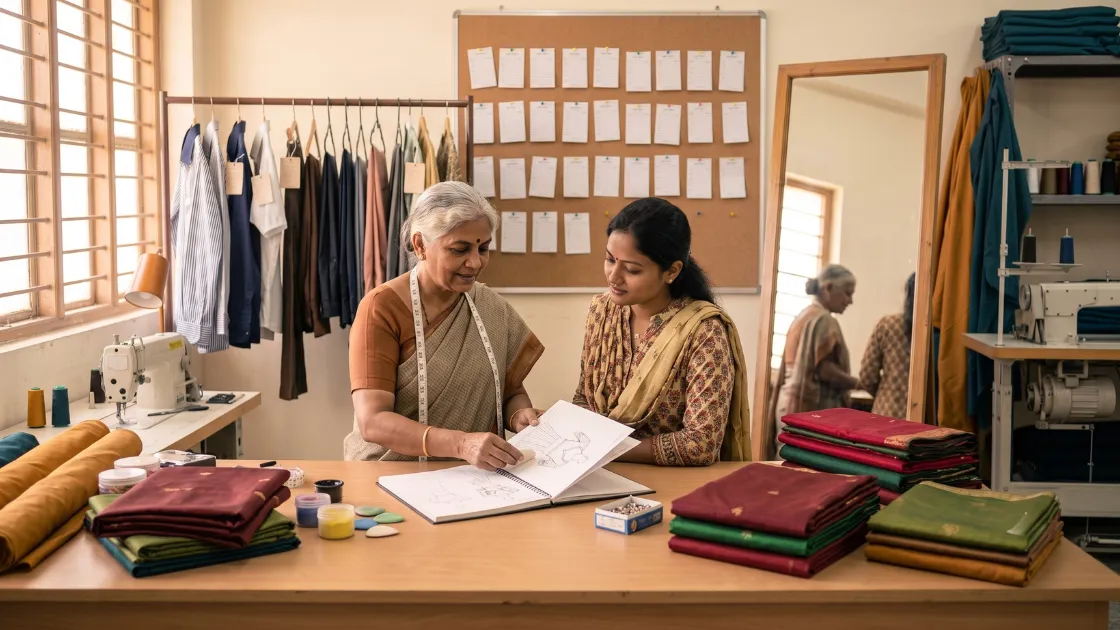
It is 5 pm on a Tuesday. Three saree blouses are cut and waiting, a fall-pico is half done, and a bride's mother is on the phone about a trial date.
An ordinary day in a ladies tailor shop — a business that runs on volume, trust and memory. This guide covers the money, the manners, and the one habit that turns a first-time customer into a fifteen-year regular.
The Three Income Layers
A healthy ladies tailor shop earns in three layers:
- Layer 1 — Blouse Volume: Simple blouses at Rs. 300–500, designer necklines at Rs. 600–1,500. An established shop with two karigars turns out 100–150 blouses a month. This layer pays the rent.
- Layer 2 — Falls and Small Jobs: Fall-pico at Rs. 60–120, hemming, hooks, minor fitting fixes. Low glamour, steady daily cash — and footfall. The customer who gives a fall-pico today gives a blouse next month and a wedding order next year.
- Layer 3 — Spikes: Festival floods and occasion wear: lehenga blouses, salwar sets for functions, bridal pieces at Rs. 2,000–10,000. Layers 1 and 2 keep the shop alive. Layer 3 is where the profit sits.
Pricing Rule
Price each layer separately on your rate card. Never let bridal-level work go at blouse rates because "she is a regular".
Fitting Etiquette That Wins Trust
Ladies tailoring is won at the trial, not at the counter.
- • Dedicated Trial Corner: Keep a curtained trial corner. Never "just turn around here" in the open shop.
- • Privacy & Comfort: Take measurements away from waiting customers, and offer a woman staff member for measuring when the customer prefers it.
- • Respectful Adjustments: Ask before adjusting anything at a fitting. "Shall I pin the shoulder?" costs nothing and earns much.
- • Preference Recording: Write down preferences: sleeve length, neck depth, lining yes or no. Asking once is service. Asking every visit says you weren't listening.
In this trade, respect brings referrals faster than discounts do.
Keep Measurements Private
A measurement diary lying open on the counter shows every walk-in your customers' names and numbers. Treat measurements as the personal data they are.
Keep records in a locked drawer — or better, in a measurement management system that opens only with your login. And never discuss one customer's fitting in front of another. Word travels when you are careful. It travels faster when you are not.
Surviving the Festival Blouse Flood
Every ladies tailor knows the flood. Fabric bought in the Aadi and Shravan sales lands on your counter in one wave, and 60 blouses arrive in the two weeks before Navratri and Diwali.
Plan the flood instead of drowning in it:
- 1. WhatsApp Cutoff: Announce a cutoff on WhatsApp status: "Diwali blouse orders close on this date." Customers respect a stated deadline — and rush to beat it.
- 2. Pattern Batching: Batch the cutting. Group similar patterns and cut them together; it saves hours.
- 3. Overtime Planning: Book karigar overtime in advance at agreed rates, not in a last-week panic.
- 4. Rush Charges: After the cutoff, accept orders only with a 25–50% rush charge instead of refusing outright.
If dates still slip every season, our guide on reducing delivery delays goes deeper.
Upsell Without Pushing
Upselling in a ladies tailor shop is a one-line habit, not a pitch:
- • Saree Matching: "Shall I do the fall-pico for the matching saree as well?"
- • Neckline Enhancement: "This neckline would sit beautifully on this fabric — Rs. 200 extra. Want to see the pattern?"
- • Garment Longevity: "Lining will give this blouse two more years."
One yes out of three attempts lifts your average bill by Rs. 100–150. Across a thousand orders a year, that is a karigar's salary — earned politely.
Measurement History Makes Lifetime Customers
Here is the sentence that keeps a customer for life: "Same measurements as your March blouse, madam — any change?"
No re-measuring visit. She sends fabric with her husband, or orders from another city on WhatsApp, and the blouse still fits. That only happens when every order's measurements are recorded and findable in seconds — not on page 63 of last year's diary.
The Juvee tailor app keeps each customer's past orders and measurements together; see Juvee for ladies tailor shops for how shops set this up.
Frequently Asked Questions (FAQ)
How much can a ladies tailor shop earn in a month?
It varies by city and volume, but here is a worked example: 120 blouses at an average of Rs. 400 is Rs. 48,000; falls and small jobs add Rs. 6,000–10,000; festival or bridal season can add Rs. 15,000 or more — all before rent and karigar wages.
What should I charge for blouse stitching?
Simple blouses commonly run Rs. 300–500 and designer work Rs. 600–1,500, varying widely by city. Cost out thread, lining and karigar piece-rate per blouse, then set rates so every piece leaves with a clear margin over cost.
How do I take blouse orders on WhatsApp without mistakes?
Only from customers whose measurements are already on record. Confirm in writing: garment, fabric received, rate, delivery date. Ask for a photo of the fabric with the order so there is no confusion at pickup.
Try This With Juvee
A ladies shop lives on repeat orders, and repeat orders live on records. Juvee keeps measurements, blouse orders and delivery dates in one app that works on phone and computer — Rs. 10,190/year, on top of a Basic plan that is free with no time limit at juvee.in/free-trial, no card asked.
Download the Juvee tailor app from Google Play and test it on this week's blouses.
Related reading