Alteration work is priced by the minute, not by the garment. Here is how to work out your own rate, and what shops commonly charge for each job.
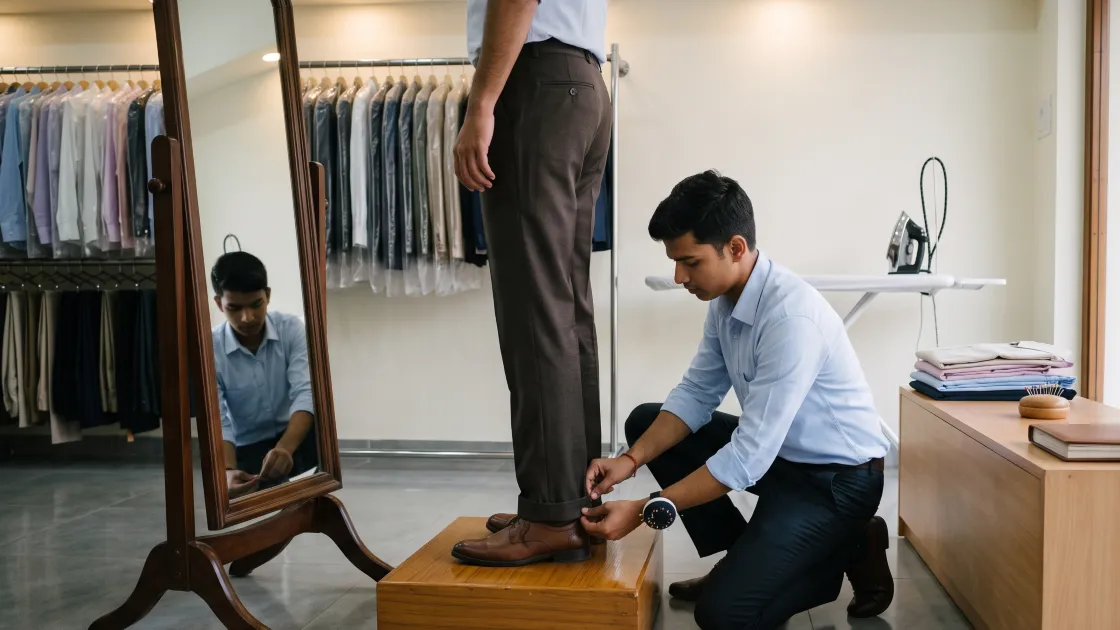
Why Alteration Pricing Goes Wrong
Stitching is priced by the garment because every shirt takes roughly the same time. Alteration is not like that. Taking in a blouse takes twenty minutes on one garment and an hour on another, and the customer cannot tell the difference by looking.
So a shop that charges a flat rate per job loses money on the hard ones and overcharges on the easy ones. Both cost customers, one immediately and one slowly.
Price the time and the risk, not the garment. A zip on a jacket lining and a zip on a skirt are not the same job.
Work Out Your Own Rate First
Before any list is useful you need one number: what an hour of your time has to earn. Work it out once and every price on the board follows from it.
- Add your monthly costs - rent, power, karigar wages, thread and consumables, phone
- Add what you need to take home
- Divide by the hours you actually sit at the machine in a month, not the hours the shop is open
- That is your hourly rate. Every job is that rate times the time it takes, plus materials
Most shops are surprised by the third step. A shop open ten hours a day is rarely stitching for ten, and pricing off shop hours instead of machine hours is why the month never adds up.
The same working out, for stitching rather than alteration, is in the tailoring rate card guide.
What Shops Commonly Charge
These are indicative bands seen across Indian towns and cities, not a recommendation. A metro shop with rent on a main road will sit at the top of every band and a neighbourhood shop at the bottom. Use them to check that your own rate is not far out of line, then set your own.
| Job | Common band | What decides where you sit in it |
|---|
Saree fall and pico | Rs 60 - 150 | Fall material included or not |
Trouser hem, plain | Rs 60 - 150 | Original hem style, cuff or no cuff |
Trouser waist in or out | Rs 120 - 300 | Whether the waistband has to be opened |
Shirt taken in at the sides | Rs 120 - 250 | Side seams only, or the sleeve too |
Blouse taken in or let out | Rs 150 - 350 | Lining, darts and hooks all add time |
Sleeve shortened | Rs 100 - 250 | Cuff and placket, or a plain sleeve |
Kurti let out | Rs 150 - 300 | Whether the seam allowance is there to use |
Zip replaced | Rs 150 - 400 | Garment type. A jacket lining is the hard one |
Lehenga or gown waist | Rs 300 - 800 | Layers, lining and how close the function is |
Urgent, same day | +30 to 50% | Say the surcharge before starting, never after |
The Three Questions Before You Quote
Ask these at the counter, with the garment in your hand, and the quote stops being a guess.
- Is the seam allowance there. Letting out is only possible if somebody left cloth to let out. Check before promising
- Is it lined. A lined garment is two garments, and the lining has to be undone and closed again
- When do you need it. Urgency is a real cost and should be priced openly, not absorbed
The first question is the one that turns a cheerful quote into an argument three days later. A dress with no seam allowance cannot be let out, and that has to be said at the counter, not after the customer has left.
Say No Properly
Some alterations should be refused, and refusing well keeps the customer. A garment that cannot be let out, a fabric that will show the old stitch line, a leather zip on a machine that will not take it - saying so plainly at the counter is better than an unhappy return.
Tell them what is possible instead. A dress that cannot be let out at the side can sometimes take a panel. A customer who leaves with an honest answer comes back with the next garment.
Write the Job Down, Not Just the Price
Alteration disputes are almost never about money. They are about what was agreed: how much shorter, how much tighter, whether the cuff was to be kept.
Write the actual instruction on the job card in the customer words - "one inch shorter, keep the cuff" - and read it back at the counter. It takes ten seconds and it settles every argument that would otherwise happen at delivery.
Job cards and who is working on what are covered in tailor job management.
Frequently Asked Questions
How much should I charge for a saree fall and pico?
Commonly between Rs 60 and Rs 150, depending on whether the fall material is included in the price. Work it out from your own hourly rate rather than copying the shop next door, because your rent and your speed are not theirs.
Should alteration cost more than stitching for the same garment?
Sometimes, and it is not unfair. Undoing somebody else finished work, matching an existing stitch line and closing it again can take longer than cutting fresh. Explain it in those terms and customers accept it.
Is it right to charge extra for urgent work?
Yes, if you say so before you start. An urgent job pushes other customers work back, and that cost is real. A surcharge stated at the counter is fair. A surcharge added at delivery is a complaint.
What if the garment tears while I am altering it?
Check the fabric at the counter and say what you see. Old cloth around a seam, weak silk and worn-out stretch fabric should be flagged as a risk before the work is accepted, with the customer agreeing to it.
Should I keep a fixed price list on the wall?
Keep bands, not fixed prices, and say that the final price depends on the garment. A board of exact figures forces you to honour a low price on a job that turns out to be twice the work.
If you are just starting out, see how to start an alteration business.
For the software side, see alteration shop management software.
On the phone at the counter, see the Juvee tailor app.
Plans and what each includes are on the pricing page.
Try It on One Real Week
Time ten alterations properly, from taking it in to handing it back, including the counter conversation. Divide your money by those minutes. That is what you are actually earning, and it is usually not what the price list says.
You can start free on the Basic plan - ten customers, twenty orders a month, no card.
Note: the bands above are indicative figures seen across Indian towns and cities when this article was published. They are not a recommended price list. Rent, wages and local competition differ everywhere, so work out your own hourly rate and price from that.