Changing the board outside does not change the business. What really separates a boutique or tailoring shop is design ownership, stock and who carries the risk — and only one of the three is about money.
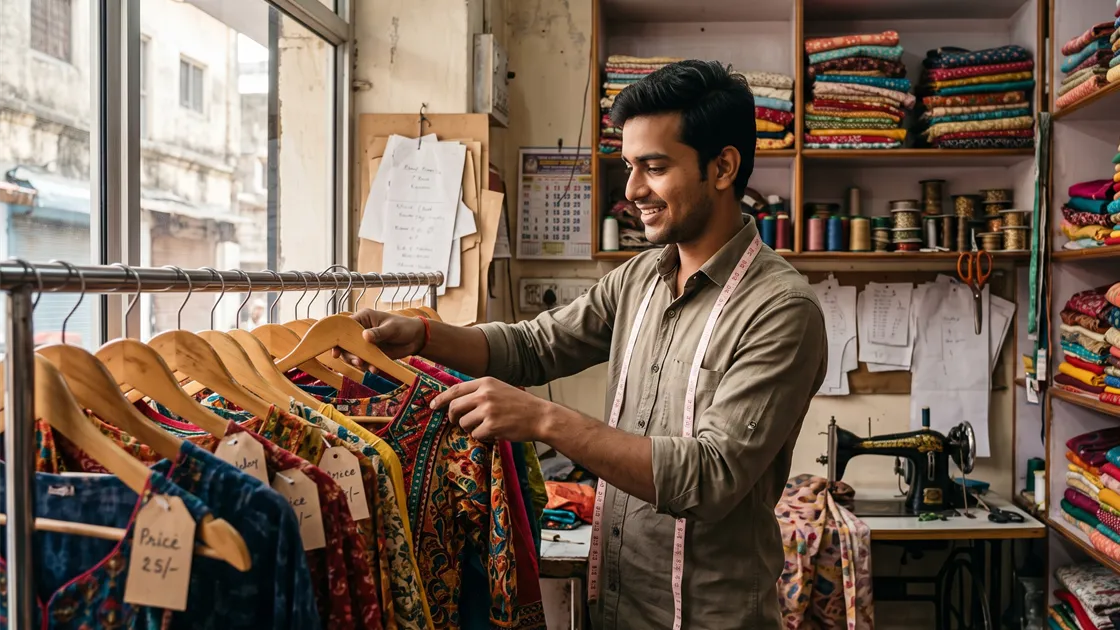
The Question Behind the Question
A tailor who is doing well eventually wonders whether he is running a boutique. The thinking is usually about status, or about being able to charge more, and the usual answer given is to change the board and raise the prices.
That answer produces a tailoring shop with an expensive board and annoyed customers. The difference between the two businesses is real, but it is not the name, the interior or the price list. It is three things about how the work arrives and who is carrying the risk.
Worth being honest about one thing before going further: a good tailoring shop is not a lesser business than a boutique. It is a different one, with better cash flow and less risk. Plenty of owners move across and move back.
The Three Real Differences
Who decides what gets made
In a tailoring shop the customer decides. She brings a design, a photograph or a garment to copy, and your skill is in executing it. In a boutique you decide — you design, and she chooses from what you offer. That single change runs through everything else.
Who owns the cloth before it is sold
A tailoring shop mostly works on cloth that is already somebody’s. A boutique buys cloth before it has a buyer, which means money sitting on a shelf and a judgement about what will sell. This is where boutiques get into difficulty, and it has nothing to do with stitching.
Who carries the risk of being wrong
If a customer picks a colour that does not suit her, that is her decision in a tailoring shop. If you bought forty metres of a shade that nobody wants, it is yours. A boutique is paid more because it is wrong at its own expense.
What Does Not Actually Differ
Several things that owners expect to change do not, and expecting them to is how the move goes wrong.
The stitching is the same. A boutique does not use different seams, and a customer cannot tell from the garment which kind of shop made it. The measurements are the same, the machines are the same and the karigars are often the same people.
The admin is the same too, and in some ways heavier. GST, attendance, karigar wages, order tracking, delivery dates and customers who do not collect — a boutique has every one of those plus stock to manage. Owners who move expecting a simpler business are surprised.
And the customer is frequently the same person. The woman who buys a ready kurti from your boutique rail is the woman who brought you cloth last year. She has not changed; what she is buying has.
The Money Looks Different, in Both Directions
The reason the move is tempting is margin. The reason it is risky is cash.
A stitching job is almost pure labour. The cloth was not yours, the cost is time, and the money arrives when the garment does. A boutique piece carries the cloth, the design time, the pieces that did not sell and the rail they sat on — so the price is higher and so is the cost behind it.
The harder change is timing. A tailoring shop collects an advance before it starts and the balance on delivery, so cash comes in before and as the work happens. A boutique spends on cloth in month one, makes in month two and sells in month three or five or never. The business can be profitable on paper and short of money all year.
The practical test is not whether you can design. It is whether you can afford to have three months of cloth sitting unsold without it affecting the wages.
The In-Between That Most Shops Actually Want
Very few successful shops are purely one or the other, and the middle is where most of the money is.
The usual shape is a tailoring shop that keeps a small rail. Six or eight pieces in standard sizes, made from cloth bought in quantity and cut during the slow weeks, sitting where customers waiting at the counter can see them. The stitching business pays the rent and the rail tests whether your designs sell — at a risk of a few thousand rupees rather than a season’s stock.
The other common shape is design-for-order: she chooses from your designs, but you only cut after she has chosen and paid an advance. You own the design, she owns the risk. Most of the boutique’s margin, almost none of its stock problem.
Both let you find out whether people want what you would make, before you commit a year to finding out.
If You Are Going to Move
Three things to settle before the board is changed, because each of them is more expensive to fix afterwards.
Decide what you will not do. A boutique that still takes any alteration and copies any photograph is a tailoring shop with higher prices, and customers notice the contradiction before you do. Being able to say no to work is what the higher price is for.
Work out your stock ceiling. A figure, in rupees, that you will not exceed in unsold cloth and finished pieces. Write it down while you are calm, because the decision to exceed it is always made in a moment of enthusiasm about a colour.
Keep taking stitching work through the transition. The temptation is to stop, to signal the change. The shops that survived the move were the ones where the old business paid the wages while the new one found its customers.
Frequently Asked Questions
What is the difference between a boutique and a tailoring shop?
Three things: who decides the design, who owns the cloth before it is sold, and who carries the risk of being wrong. A boutique designs, buys cloth before it has a buyer, and absorbs the loss when something does not sell. The stitching itself is identical.
Can a tailoring shop charge boutique prices?
Only if it takes on boutique risk. The higher price pays for design, for cloth bought in advance and for the pieces that never sell. Raising prices without taking on any of that is a price rise, and customers read it as one.
Is a boutique more profitable than a tailoring shop?
Higher margin per piece, worse cash flow. A tailoring shop takes an advance before it starts; a boutique spends on cloth months before anything is sold. A boutique can be profitable on paper and short of money all year.
What is the safest way to try being a boutique?
Keep the stitching business and add a small rail — six or eight pieces in standard sizes, cut during slow weeks. It tests whether your designs sell for a few thousand rupees rather than a season’s stock.
Where Juvee Helps
A boutique needs everything a tailoring shop needs plus stock, designs and pieces that have not sold yet. Juvee handles both sides, so a shop that is moving across does not change system halfway — see boutique management. The Basic plan is free with no time limit, and paid plans start at ₹10,190 a year including GST; every plan is on the pricing page. If the answer is yes, how to start a boutique in India is the next step.