A bulk order is not a big version of a small one. Why a tailoring shop should quote differently, schedule backwards, and build in the two things that go wrong on every bulk order it has not done before.
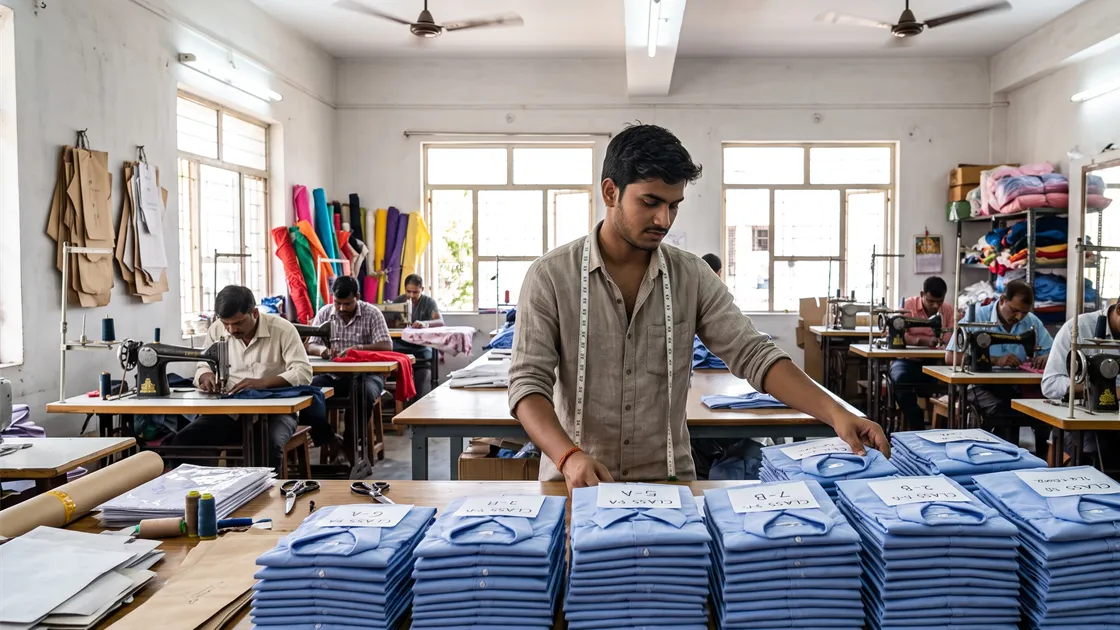
Two Hundred Shirts Is Not Two Hundred Shirts
The first large order a shop wins is usually quoted the same way as a single garment: the price for one, multiplied, with a discount because it is a lot.
That arithmetic is wrong in both directions at once, which is why the orders that look most profitable often are not. Some costs genuinely fall — you cut two hundred collars in one lay instead of two hundred times, you buy cloth by the roll, you set the machine up once. Others appear that did not exist before: a sample that has to be approved, sizes you have to survey, packing, delivery, and somebody’s full attention for a fortnight.
The shops that lose money on bulk work almost always lost it on the second list, not the first.
What to Count Before Quoting
The sample, and the ones after it
Nearly every institutional buyer wants a sample before committing, and about half ask for a change and a second. That is two garments, full cost, before a single rupee arrives. Build it into the quote or treat it as the cost of bidding.
Measuring two hundred people
This is the cost that gets forgotten completely. A school measurement day is two people for two days. Somebody is paying for that, and if your quote does not say so, it is you.
The sizes you will get wrong
In any bulk order some garments come back to be adjusted — children grow between measurement and delivery, and adults give you the size they wish they were. Five per cent is a realistic allowance. Quote without it and that work is free.
Cloth bought up front
Two hundred shirts is a roll, paid for before anything is stitched and before anything is paid to you. That money is out of the business for weeks, and if the order is cancelled it is sitting on your shelf in their colour.
Packing and delivery
Two hundred garments individually folded, bagged, labelled by name or size, boxed and taken somewhere. A day of work and a vehicle, on an order where everybody has stopped thinking about cost.
What you turn away
A fortnight of your machines on one order is a fortnight of regular customers told to wait. Some of them do not come back, and that is a real cost of the order even though it never appears on any sheet.
Schedule It Backwards
A bulk order has a date that cannot move — the school term, the hotel opening, the function. So the schedule is built from the delivery date backwards, not from today forwards.
Work back in this order: delivery day, then packing and labelling, then finishing and pressing, then the last stitching day, then the adjustment window, then the main stitching run, then cutting, then cloth arriving, then sample approved, then measurements taken. Put a date on each.
Two of those are where schedules die. The <b>adjustment window</b> — the days reserved for the garments that come back — is left out by almost every shop doing its first bulk order, and then the adjustments eat the packing days. And <b>cloth arriving</b> is treated as certain when it is the single least reliable step; a supplier who is a week late makes every other date impossible.
Build both in. A schedule with no slack is a schedule that will be missed, and on a bulk order it is missed publicly.
The Two Things That Go Wrong
The sizes do not match the people
Measured in May, delivered in June, and a hundred and forty children have grown. Or the measurement sheet was filled in by a teacher rather than taken by you. The defence is to measure as late as the schedule allows, to take the measurements yourself where you can, and to reserve five per cent of the run for adjustment rather than pretending it will not happen.
The cloth runs short at garment one hundred and eighty
Dye lots differ. A roll bought later will not match a roll bought earlier, and on two hundred identical shirts that is visible from across a room. Buy the whole quantity in one lot, at the start, with a margin — and check that the margin survived the cutting before you reach the end of the run.
Getting Paid
A bulk order is the largest sum a small shop handles and often the slowest to arrive, because the buyer is an institution with its own payment cycle.
Structure it in three. An advance that covers the cloth, taken before any is bought — this is not negotiable and a serious buyer expects it. A stage payment at delivery of the main run. The balance after the adjustments are done, which is the only part worth leaving open, because it is what gets the adjustments taken seriously by both sides.
Get the terms in writing before cutting, with a named person and a date. A school that pays in forty-five days is not a problem if you knew; it is a crisis if you assumed thirty and paid your karigars for a fortnight on the assumption.
And keep the delivery note signed. On a two-hundred-garment order, a dispute about how many were delivered is a dispute you cannot win from memory.
Frequently Asked Questions
How should a tailoring shop price a bulk order?
Not as the single-garment price multiplied. Cutting and setup costs fall, but samples, a measurement day, a five per cent adjustment allowance, packing, delivery and the regular work you turn away all appear. Count the second list before discounting on the first.
How much advance should I take on a bulk order?
Enough to cover the cloth, taken before any cloth is bought. A serious institutional buyer expects this. Then a stage payment at delivery of the main run and the balance after adjustments.
What goes wrong most often on bulk orders?
Sizes and dye lots. People are measured weeks before delivery and children grow; and cloth bought in two lots does not match, which is obvious across two hundred identical garments. Measure late, buy the cloth in one lot with a margin.
How do I schedule a bulk order?
Backwards from the delivery date, with a reserved adjustment window and slack for the cloth arriving late. Those two are left out of most first bulk schedules, and they are what the schedule fails on.
Where Juvee Helps
Two hundred garments is two hundred names, sizes and stages, and it is the point at which a register stops working. Juvee holds the measurement list, the stage of each batch and what has been delivered against what was ordered, and follows garment production batch by batch — see uniform manufacturing. The Basic plan is free with no time limit, and paid plans start at ₹10,190 a year including GST; the pricing page lists every plan. For winning school contracts specifically, read school uniform manufacturing.