Most shops close by switching off the lights. A fifteen-minute daily closing routine catches the missing money, the order nobody started and the cloth that walked, while they can still be traced.
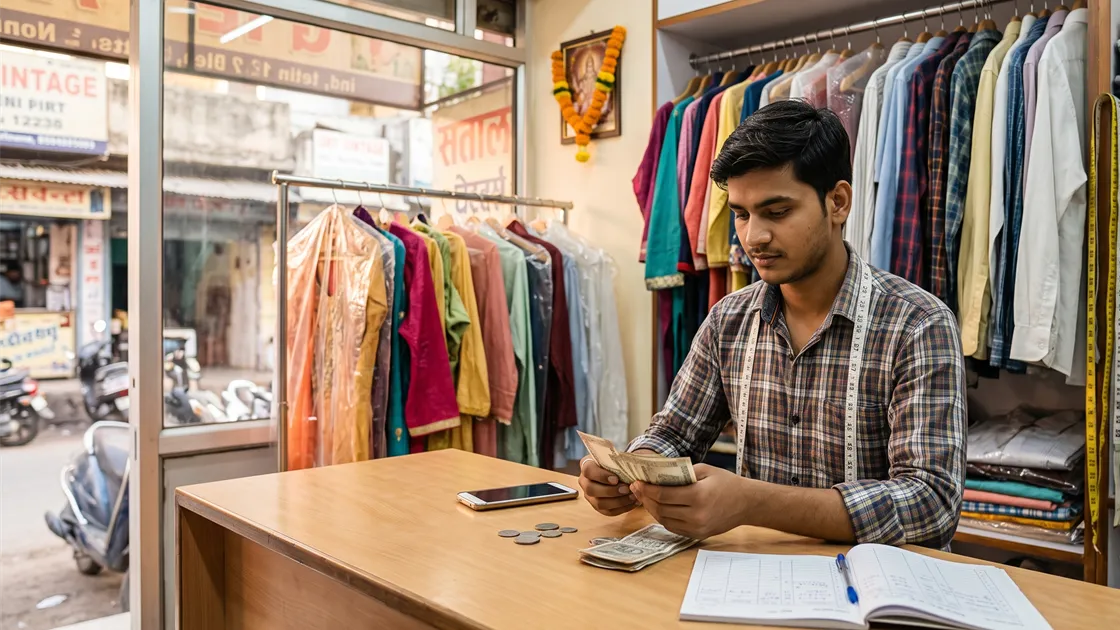
The Fifteen Minutes That Pay For Themselves
A tailoring shop closes the way it opened: somebody turns the key. The day’s cash goes in a drawer or a pocket, the order book stays where it is, and whatever went wrong today will be discovered next week or never.
The argument for a closing routine is not tidiness. It is that almost every problem a small shop has is cheap to fix on the day it happens and expensive a fortnight later.
Four hundred rupees missing from today’s takings can be traced today — three people remember the afternoon. The same four hundred, found during a monthly count, cannot be traced by anybody and will simply be written off. An order taken this morning and never written down can be recovered this evening by asking the person who took it. Next Tuesday it is a customer standing at the counter asking where her blouse is.
Fifteen minutes, at the same time, by the same person. That is the whole system.
The Money
Count the cash
Physically, note the figure, and take out the float you keep for change so tomorrow starts from a known number. Counting without removing the float means tomorrow’s count is compared against a different figure and the arithmetic drifts.
Match it against the day’s bills
Cash bills should equal cash in hand, less the float. If they do not, the gap is found now while the day is still in people’s heads. A gap of twenty rupees is rounding; a gap of five hundred is an event.
Check the UPI separately
Open the app and compare the day’s credits with the bills marked as paid digitally. This is where most mismatches now live, usually because a payment came in and nobody marked the bill.
Note what was spent
Thread, an auto fare, tea, a zip bought from the shop opposite. Small amounts taken from the drawer all day, and the reason tonight’s cash does not match if they are not written down.
The Work
Every order taken today is written down
Walk the day. An order agreed verbally during a busy afternoon and never entered is the most expensive thing a shop loses, because it is discovered by the customer.
Every garment delivered today is marked delivered
Otherwise the rack and the book disagree, and by Friday nobody trusts either. It also stops the shop chasing a customer for a garment she already has.
Tomorrow’s deliveries are actually ready
Look at what is due tomorrow and look at where it is. Anything due tomorrow and not yet finished is tonight’s problem, not tomorrow morning’s, and tonight you can still telephone.
Anything that slipped today gets a message
If a date moved, the customer hears it this evening. A customer told the day before is rarely annoyed; one who arrives to collect always is.
The Shop
Three minutes, and it is mostly about the things that are worth money and cannot be replaced.
Customer cloth goes into its labelled bag and onto the shelf, not left on the cutting table overnight. Cloth left out is cloth that gets a tea ring on it, and a customer’s saree is not yours to be careless with.
Finished garments go on the rack in delivery-date order. The point is not neatness; it is that tomorrow morning somebody can find a garment in ten seconds with a customer waiting.
Irons off at the plug, not at the switch. This is the single most common cause of fire in a tailoring shop and it costs four seconds to check.
And look at the floor. Thread and offcuts swept up tonight is a shop that opens clean; left, it becomes the pile that nobody deals with for a month.
Making It Survive
Every shop has tried a closing routine. Most lasted a fortnight, and they failed for the same four reasons.
It was too long. A thirty-item list gets done properly twice and then abandoned. Fifteen minutes and about a dozen checks is what survives; anything more is a list you will stop opening.
It had no owner. "Somebody should check the cash" means nobody does. One named person closes, and when they are away one named substitute does.
It happened at a different time each day. Closing done whenever the last customer leaves gets squeezed to nothing on a busy evening — which is exactly the evening it was needed. A fixed time, with the shutter half down if necessary.
And nothing was written. A routine where the numbers are looked at and not recorded cannot answer the one question worth asking: was last Tuesday like this too? A single line a day — cash, UPI, orders in, orders out — becomes, after a month, the most useful page in the shop.
What a Month of It Tells You
Thirty lines, each four numbers, and a shop can see things it has never been able to see.
Which days actually earn. Most owners are wrong about this — the day that feels busy and the day that takes the most money are frequently not the same, because busy often means many small jobs.
Whether orders in and orders out are balanced. Taking twelve and delivering nine, every week, is a backlog building quietly, and it will surface as late deliveries about a fortnight later.
How much of the business is now digital. A shop that was ninety per cent cash two years ago and is sixty per cent UPI today should know that, because it changes how the float works and when money is actually available.
And what a normal day looks like, which is the only way to recognise an abnormal one. A shop with no baseline cannot tell a bad week from a bad season.
Frequently Asked Questions
What should a tailoring shop check before closing?
Cash counted against the day’s bills, UPI credits matched to bills, orders taken today written down, deliveries marked, tomorrow’s due work located, customer cloth put away, and irons off at the plug. About a dozen checks, fifteen minutes.
Why count the cash daily instead of monthly?
Because a gap found today can be traced — people remember the afternoon. The same gap found in a monthly count cannot be traced by anybody and gets written off. Daily counting is the only version that recovers money.
Who should do the closing routine?
One named person, at a fixed time, with one named substitute for when they are away. "Somebody should check" means nobody does, and a routine done whenever the last customer leaves gets skipped on exactly the evenings it was needed.
What is worth recording each day?
Four numbers: cash taken, digital taken, orders in, orders out. After a month those thirty lines show which days really earn, whether a backlog is building, and what a normal day looks like — which is the only way to recognise an abnormal one.
Where Juvee Helps
Cash against bills, UPI against bills, orders in against orders out — four numbers that take fifteen minutes by hand and are already there if the bills were made in one place. See billing and invoicing. Juvee’s Basic plan is free with no time limit, and paid plans start at ₹10,190 a year including GST; every plan is on the pricing page. For the wider bookkeeping this feeds, read tailor shop accounts.