Buying cloth in bulk looks like a saving and is often a loan to yourself. Here is what to buy, what never to buy, and how to tell afterwards whether it worked.
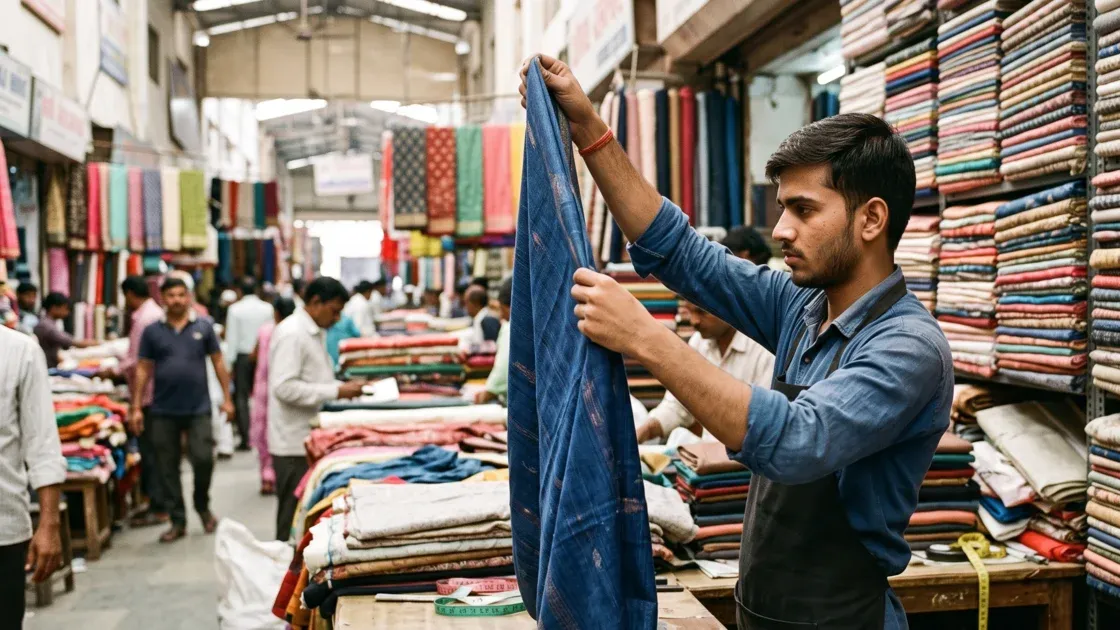
The pitch is always the same and always true: per metre, it is cheaper. What the pitch leaves out is that the discount is paid on the day and earned back slowly, and only if the cloth actually sells.
Plenty of small shops have their profit sitting on a shelf in a colour nobody asked for.
What Bulk Buying Really Costs
- The money, now. Cash that could have paid rent, wages, or a second machine is in cloth until somebody buys it.
- The space. A small shop that fills its back room with stock loses the room it works in.
- The risk. Cloth fades, gets marked, goes out of fashion, and gets damp. None of that happens to money.
- The pressure. Shops with stock start steering customers towards what they hold. Customers notice.
None of this makes bulk buying wrong. It makes it a decision rather than a bargain.
What Is Usually Safe to Hold
The test is boring: does it sell steadily, in every season, in a colour nobody has an opinion about?
- Lining and interlining. Used constantly, colour rarely argued over, does not date.
- Fall cloth in the common shades. Steady demand, small money, easy to store.
- Plain school-uniform material, if you do uniform work. Predictable, and the season is known in advance. Our post on school uniform manufacturing covers that cycle.
- Thread, zips, hooks, buttons in standard sizes. The cheapest things to hold and the most annoying to run out of mid-job.
What Usually Should Not Be Held
- Prints and bright fashion colours. What looks unmissable in the market is what sits on the shelf in eight months.
- Anything bought only because the rate was good. The rate is not a reason. Demand is.
- Material you have never stitched. A cloth that behaves badly under the machine is a quantity of future complaints.
- Heavy bridal and occasion fabrics, unless a specific order is already placed. High value, narrow demand, easy to mark.
Buying Well, Whatever You Buy
Check the roll, not the sample
Colour moves between rolls. Ask to see the actual piece, in daylight if you can get to a door, and check the whole width for marks and lines.
Test the shrink before you commit
A metre of a new material, washed the way your customers will wash it. If it moves, you need to know before it becomes forty garments. Testing cloth for shrinkage covers how.
Ask what happens if it is faulty
Before paying, not after finding a flaw at metre nine. A supplier who will not answer that question clearly has answered it.
Write down what you paid, per metre
Not the total. The per-metre rate, with the date. Six months later this is the only way to know whether the market has moved or your supplier has.
Start smaller than offered
The first purchase from any supplier is a test of the supplier as much as the cloth. Take less than they want to sell you, see how it behaves, then decide.
How to Tell Whether It Worked
Most shops never find out, because the purchase and the sales are never put side by side.
Three figures answer it: what you paid, how much you have left, and how long it has been there. If half of it is still on the shelf after a season, the discount was not a discount.
This is the whole argument for tracking cloth properly rather than by eye. Managing fabric inventory covers the habit, and how much cloth each garment needs is what turns stock into a number of garments rather than a pile.
If You Are Not Sure, Do Not
A small shop that buys cloth only against orders is not being timid. It is keeping its money where it can be moved.
Bulk buying belongs to the shop that already knows what it sells, in what quantity, in which months. That knowledge comes before the purchase, not after it.
The Supplier Matters as Much as the Rate
A supplier who answers the phone during season, tells you honestly when something is out, and takes back a faulty roll without an argument is worth more per year than a slightly better rate from somebody who does none of that.
Work out which of yours is which by keeping the small facts: what was quoted, what arrived, how long it took, and what happened when something was wrong. Two seasons of that makes the choice obvious.
Buying for an Order Is Not the Same Job
Cloth bought against a specific order carries none of this risk, and most small shops should be doing more of it rather than less. The one thing to get right there is quantity: measure the garment before buying, not after, and keep a small margin for a mistake in cutting.
How much cloth each garment needs turns that into numbers you can buy against.
Frequently Asked Questions
Should a small tailoring shop buy cloth in bulk?
Only what it already sells steadily — lining, fall cloth, thread and fittings, uniform material if it does uniform work. Bulk buying fashion prints on a good rate is how small shops tie up money they need elsewhere.
How do I know if wholesale buying saved me money?
Compare what you paid with how much is still on the shelf after a season. A discount on cloth that has not sold is not a saving yet.
What should I check before buying a roll of fabric?
See the actual roll rather than the sample, check the full width for marks in the best light available, test a metre for shrinkage, and ask what happens if a fault appears mid-roll.
How much cloth should I hold?
Enough that you do not stop work, and not so much that the shop is working around it. Thread and fittings are worth holding deep; fabric is not, unless you know its demand.
Should I record what I paid per metre?
Yes, with the date. It is the only way to tell later whether a rate you were quoted is better than last time or just sounds like it.
Count What Is Already on the Shelf
Before the next buying trip, count what you are holding and how long it has been there. Most shops find something that has not moved in a year, and that piece is the argument.
Juvee’s fabric inventory keeps what you bought, what is left and what it went into, so the next buying decision is made from figures instead of from a feeling in the market. The free Basic plan is enough to start counting.