Good karigars are rarely found through advertisements. Here is where they actually come from, what one test piece tells you, and what to agree before day one.
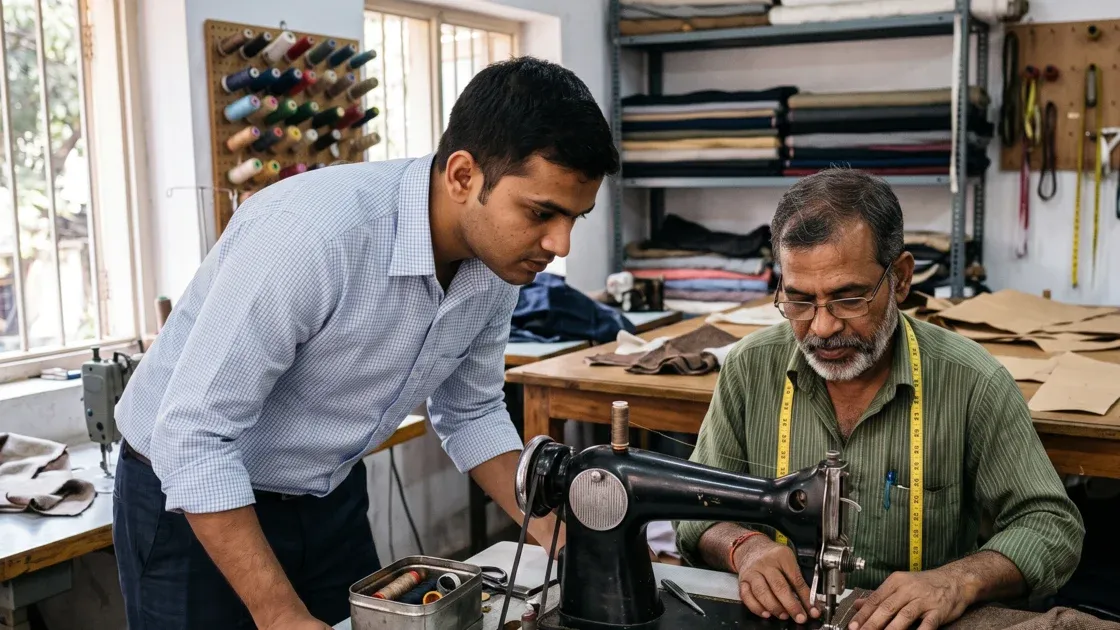
Every shop owner has the same two complaints: there are no good karigars, and the ones you find leave. Both are partly true. Both also get worse when hiring is done the way most shops do it — in a hurry, when somebody has already left.
Where They Actually Come From
Almost never from a board outside the shop. In order of how often it works:
- Your own karigars. Good ones know other good ones, and they will not recommend somebody who will embarrass them. This is the single best source and the most underused.
- The cloth shops. The people at the counter know who is working where, who is unhappy, and who has just come back to town.
- Other shops closing or shrinking. A shop winding down has people looking, and they arrive trained.
- Tailoring schools, for juniors. Not for finishing work, but a school-trained hand who wants to learn is often better than an experienced one with settled habits you do not want.
- WhatsApp groups of tailors in your area. Slower, but real people with names attached.
The common thread: somebody vouches. In a trade where skill cannot be seen on paper, a name is worth more than a CV.
Ask Before You Need Somebody
The hiring that goes wrong is the hiring done on a Monday after somebody left on Saturday. You take whoever is available, during season, and pay for it for months.
Mention to your own people, and to the cloth shop, that you would take somebody good if they came along. Not urgently. That way, when a name comes up, you are choosing rather than filling a hole. Our post on when your master cutter leaves is about the version of this that has already gone wrong.
The Test Piece
One piece of real work tells you more than an hour of conversation. Give a garment you would otherwise give a trusted hand, and watch four things.
- The inside. Turn it out. Finishing on the side nobody sees is the clearest signal of how somebody was trained.
- What they do when something is unclear. Do they ask, or do they decide? Both can be fine. Deciding silently and being wrong is the expensive one.
- The time, against what they said. Not whether they were fast. Whether they knew how long they would take.
- The machine afterwards. How somebody leaves a machine and a table says a good deal about the next two years.
Pay for the test piece whatever happens. It is real work and the shop keeps it. A free trial is how you get remembered badly by somebody who then tells other karigars.
What to Agree Before Day One
Most karigar disputes are not about money. They are about money that was never stated clearly.
- Piece rate or monthly, and exactly what is included. Our post on piece rate or monthly pay sets out how each one behaves.
- Which garments are which rate. A rate for “a blouse” will be argued about the first time a lined one arrives.
- When payment happens. Weekly, monthly, a date. Vagueness here is where trust goes.
- What happens to a piece that has to be redone. Decide it now, calmly, not during an argument about a specific garment.
- Hours, and what a busy week looks like. Season is going to happen. Say so before it does.
None of this needs a printed contract. It needs saying out loud and writing down, in whatever form you both read.
The First Month Decides It
A karigar who leaves in three months usually decided in week two. The shop was disorganised, the work came in bursts, nobody explained anything, and the pay conversation was awkward.
What keeps people is dull: work that arrives steadily, rates that are clear, pay on the day it was promised, and somebody who notices good work. Our post on training a new karigar in the first 30 days covers those weeks properly.
Two Mistakes That Cost the Most
Hiring for speed alone
A fast hand who finishes badly costs more than a slower one who does not, because every redone garment is paid for twice and arrives late. Look at the inside of the test piece before looking at the clock.
Not saying what is wrong, until it is too late
Shops often let small things go for weeks and then raise everything at once, which lands as an attack. Said once, quietly, on the day it happens, most of it is fixed without anybody minding.
What Keeps Somebody, and What Does Not
A few hundred rupees more from the shop down the road is the reason given. It is rarely the reason. People leave shops where the work is unpredictable, the pay date moves, and nobody ever says a piece was well done.
The shops that keep their people are not the most generous ones. They are the ones where the week is organised, the rate is not argued about, and payment happens when it was promised. Our guide to managing karigars covers the running of it.
Frequently Asked Questions
Where can I find a good karigar?
Ask your existing karigars first, then the cloth shops you buy from, then shops that are closing or shrinking. Good ones are found through people who vouch for them, not through advertisements.
How do I test a karigar before hiring?
Give one real garment, pay for it, and look at the inside finishing, whether they asked when something was unclear, whether their time matched what they said, and how they left the machine.
Should I pay piece rate or a monthly salary?
It depends on how steady your work is and how much you need somebody present rather than productive. This post compares the two honestly, including where each one goes wrong.
Why do karigars leave so quickly?
Usually not for a few hundred rupees. Uneven work, unclear rates, late payment and never being told when something was done well account for most of it.
Should I hire a trained karigar or train a junior?
If you need finishing quality now, hire trained. If you need hands and can teach, a school-trained junior who wants to learn often settles better than an experienced hand with habits you do not want.
Ask One Person This Week
You do not need to be hiring to start. Ask your best karigar whether he knows anybody good, and tell the cloth shop the same thing. Then wait.
When somebody does join, the thing that makes the pay conversation easy is a record of what was actually produced. Juvee tracks output per person and turns it into attendance and payroll, so piece-rate pay comes from what was stitched rather than from two people remembering differently.