Offering home delivery sounds like a cost and is usually a way of getting paid faster. What a tailoring shop should charge, which orders are worth collecting, and the four things that go wrong.
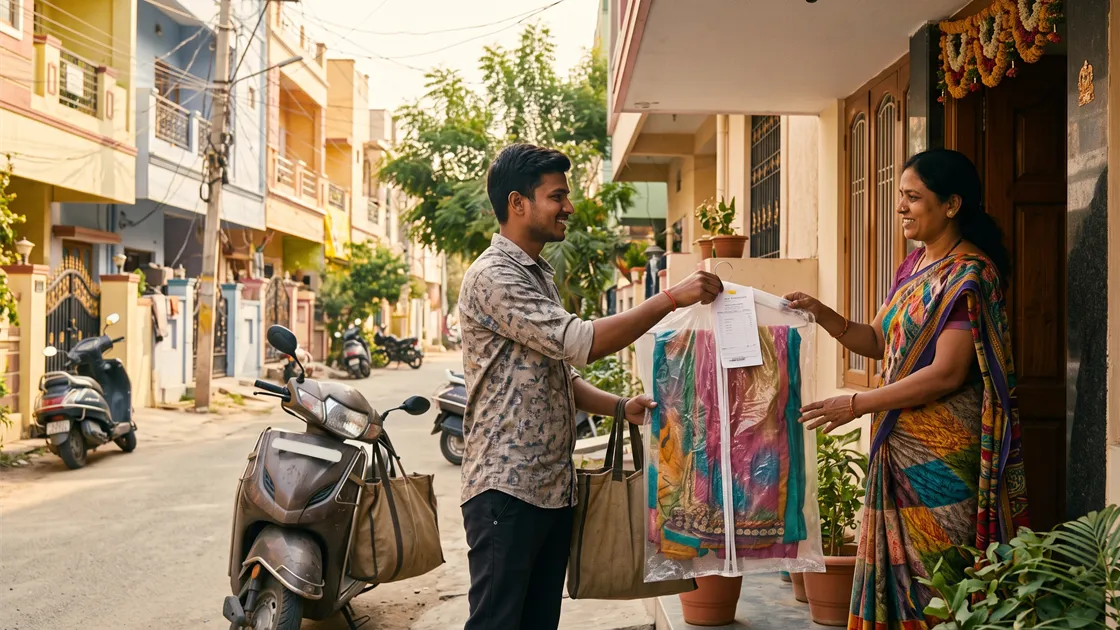
Two Journeys You Are Already Paying For
Every stitched garment involves the customer travelling twice: once to be measured and leave the cloth, once to collect. Most shops think of those journeys as hers and therefore free.
They are not free to you. The second journey is the one she postpones, and a garment that sits finished on the rack for three weeks is money you have already spent and not yet been paid. Every shop has a shelf of them.
That is the real case for delivery, and it is not about convenience or looking modern. A garment delivered is a garment paid for. The shops that started delivering mostly found that the collection problem shrank before anything else changed.
Which Orders Are Worth It
Not all of them, and a shop that offers delivery on everything will lose money on the small jobs while a boy spends the afternoon on a scooter.
Large and bridal orders — always worth it
The bill is big enough to absorb the cost several times over, the customer is nervous about the garment, and arriving at her door with it is the last impression she has of the shop. This is where delivery pays for itself in goodwill as well as cash.
Uncollected garments — worth it for the money alone
Anything finished and sitting more than two weeks. The trip costs fifty rupees and recovers a balance of several hundred. Offer it rather than waiting: "shall I send it across tomorrow, you can pay then."
Regular customers — worth it as a standing arrangement
A family that orders every month, a shop that sends work weekly. One route, several stops, and it becomes the reason they do not shop around.
Small single alterations — usually not
A hundred-rupee hem does not carry a delivery. Either charge for it properly or offer collection only when it can share a trip that is happening anyway.
Collection of cloth — only for known customers
Going to fetch cloth from someone who has never ordered is a trip that may lead nowhere. For a regular it is the single most useful thing you can offer, because it removes her first journey entirely.
What to Charge
Delivery is a service with a real cost: a person, a vehicle, fuel and the time they are not in the shop. Giving it away by accident is how it becomes resented and then quietly stops.
Three structures work, and the right one depends on how spread out your customers are.
<b>Flat fee by distance.</b> One price inside two or three kilometres, a higher one beyond. Simple to quote and easy to say at the counter.
<b>Free above a bill value.</b> Free over a figure, a small charge below it. This is the structure that changes behaviour — customers add the second blouse to clear the threshold.
<b>Free for regulars, charged for others.</b> A way of rewarding the customers who are worth most without announcing a discount.
Whichever you choose, write it on a card at the counter and quote it when the order is taken rather than at delivery. A charge that appears at the door is a charge that gets argued about on the doorstep, where you always lose.
The Four Things That Go Wrong
Nobody is home
The commonest and the most expensive, because it doubles the trip. Fix it by confirming the same morning rather than the day before — one message, "coming between four and six, is that all right" — and by never delivering without a reply.
The balance is not collected
The boy hands over the garment and comes back with no money, because she said she would pay next time. Settle this before anyone leaves the shop: either the balance is paid before delivery, or the person delivering is told plainly that the garment does not leave his hand without it.
The garment arrives creased or marked
Three weeks of work undone by a scooter and a plastic bag. Every delivery goes on a hanger in a cover, or folded flat in a box — never stuffed in a bag between the knees.
Nobody can prove it was delivered
She says it never came. Without a record you cannot argue, and you will remake it. A photograph at the door, or a signature, or a message sent the moment it is handed over — any of the three ends the dispute before it starts.
Running It Without a Second Person
Most shops cannot justify someone whose job is delivery, and do not need to. What they need is for the trips to be batched instead of scattered.
Pick two afternoons a week and deliver only on those. Everything ready in between waits for the next run, and customers are told the day when the order is taken. One person, two hours, six or eight stops, instead of five separate trips across the week that each cost an hour.
Plan the route the night before, by area rather than by who ordered first. Three garments in one neighbourhood is one trip; the same three done in order of readiness is three trips.
And take the cloth collections on the same run. The boy going out to deliver in an area can pick up cloth from two customers there, which turns a cost into something that also brings work in.
If the volume genuinely is not there, use a local delivery service for the large orders only and keep the rest as counter collection. The mistake is to offer delivery on everything and then do it badly.
What Has to Be Written Down
Delivery adds information the shop has never needed before, and a register built for counter collection has nowhere to put it.
The address, properly — not "near the temple", which is how half of them are given. A landmark as well as a house number, because that is what the person delivering will actually use.
A contact number that will be answered during the day, which is not always the one that placed the order.
The delivery day and the window, agreed rather than assumed.
The balance due, visible to whoever carries the garment. The commonest cause of money not collected is that the person at the door did not know what to ask for.
And the fact that it was delivered, with the date. Otherwise the order stays open in the book, the shop chases a customer who already has her garment, and the next count of uncollected items is wrong.
Frequently Asked Questions
Should a small tailoring shop offer home delivery?
For large and bridal orders, for regular customers and for anything uncollected after two weeks, yes — a delivered garment is a paid garment. For small single alterations, usually not, unless it shares a trip that is already happening.
How much should a tailoring shop charge for delivery?
Either a flat fee by distance, or free above a bill value with a small charge below it. The second changes behaviour, because customers add an item to clear the threshold. Quote it when the order is taken, never at the door.
How do I make sure the balance is collected on delivery?
Decide before anyone leaves the shop: either the balance is paid in advance, or the person delivering is told the garment does not leave his hand without it. Make sure the amount due is written where he can see it.
How can a one-person shop manage deliveries?
Batch them. Two fixed afternoons a week, routed by area rather than by who ordered first, with cloth collections on the same run. Six stops in one trip costs an hour; the same six scattered across the week cost five.
Where Juvee Helps
Delivery is just the last stage of an order, and it needs the same things the others do — an address, a day, a balance and a record that it happened. Juvee carries all four on the order itself; see order tracking. The Basic plan is free with no time limit, and paid plans start at ₹10,190 a year including GST; the pricing page lists every plan. If your shelf of uncollected work is the reason you are reading this, start with garments nobody comes to collect.