A rush order does not cost you one garment of capacity. It costs you every order it pushes back. This is how to decide, price and slot one in.
The Real Cost of Saying Yes
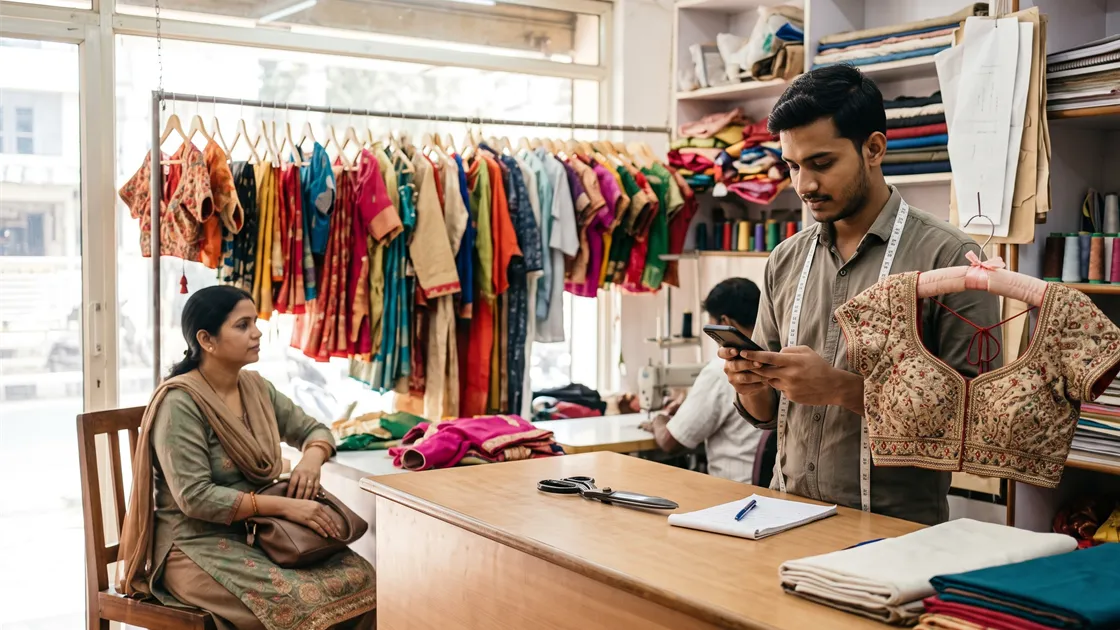
A customer asks for a blouse by tomorrow evening for a function. You have eleven garments due this week and one karigar who can do a blouse properly. You say yes, because she is standing in front of you and the other eleven customers are not.
What actually happens is that the blouse gets done and two other orders slip by a day. Those two customers do not know why. They only know that this shop said Thursday and delivered Friday, and they will mention it to someone.
That is the arithmetic nobody does at the counter: one rush order that is accepted badly damages two relationships to save one. Accepted properly, it damages none and earns more.
The Four Questions Before You Say Yes
Ask these in order. They take ninety seconds and they are the whole decision.
- What is actually free before the deadline? Not "can it be done" — whether there is real machine and karigar time before tomorrow evening that is not already promised.
- Who can do it? A rush order goes to your most reliable hand, not the one who happens to be free. A rush order done badly is worse than one refused.
- Which orders move if I take it? Name them. If you cannot name them, you do not know your load, and you are guessing.
- Is the cloth here and is it enough? A rush order that stops halfway because the cloth is short is the worst outcome available.
The third question is the one shops cannot answer, and it is the reason rush orders go wrong. If you can see what is due on each day and who it is with, the decision is a glance. If it lives in a register and in your head, it is a guess every time — which is most of the case for keeping delivery dates and work in hand in one view.
Charge for It, Openly
An urgent charge is normal and customers expect it. What they do not accept is a vague larger number with no explanation.
Set a standing rule and state it the same way every time. Something like: same day, plus 50 per cent; next day, plus 30 per cent; within three days, plus 15 per cent. Put it on a small card at the counter. Then it is a shop policy rather than a judgement about that customer, which is much easier to say and much easier to hear.
Two points of practice. Say the figure before you accept, not on the bill at delivery. And do not negotiate it down — the moment you do, it becomes an opening offer and every future rush order starts with a discussion. A rate card that includes urgent charges is part of the same discipline as our note on setting a rate card.
When to Say No
Refusing well is a skill, and it keeps customers more often than accepting badly.
- When the garment cannot be done properly in the time. A bridal blouse with hand work is not a same-day job. Saying so is more professional than delivering a poor one.
- When it would break a promise to a wedding order. Wedding dates do not move. Everything else can be discussed; those cannot.
- When your best hand is already on something urgent. Two rush orders at once is how both come out badly.
- When the customer wants it urgent and cheap. This one is a preview of the rest of the relationship.
The way to refuse is to offer something. "I cannot do it by tomorrow evening properly. I can do it by Friday morning, or I can do a simpler neckline by tomorrow." A customer given two real options rarely leaves. A customer given a flat no does.
Once You Have Accepted It
Tell the karigar the deadline, not just the order
"This is for tomorrow six o'clock" is different information from "do this one next". Karigars sequence their own work and will make the right choice if they know.
Take the measurements twice
There is no time for a refit on a rush order, so the check that normally happens at the trial has to happen at the counter. Take the critical measurements, then take them again before cutting.
Set the delivery time, not the day
"Tomorrow" means morning to her and evening to you. Say "tomorrow after five" and write it down. Most rush-order arguments are about the hour, not the day.
Tell the customers whose orders moved
This is the step that is always skipped and it is the one that protects you. A message the same day — "your kurti will be ready Friday instead of Thursday" — costs nothing and turns a broken promise into a managed one. A customer told in advance is rarely annoyed. A customer who arrives to find it not ready always is.
Doing that reliably for two or three customers a week is exactly the sort of thing that gets dropped when the shop is busy, which is when it matters most. If your system can send the message, let it — this is the everyday use of WhatsApp for a tailoring shop.
Season Changes the Answer
In a normal week you can absorb one or two rush orders without anyone noticing. In September and October you cannot, because everything is already urgent.
During festival and wedding season, the right policy is stricter: a higher urgent charge, a hard cut-off date after which nothing new is accepted for the festival itself, and no exceptions for people you know. The shops that come out of season with their reputation intact are the ones that stopped taking orders a week before the shops that did not. Our note on the festival season rush covers the planning side of that.
What a Rush Order Tells You
One rush order a week is normal trade. Five a week means something else — either your normal delivery times are too long, so customers only come to you when desperate, or you are quoting dates you cannot keep, so every order becomes urgent by the end.
Both are worth knowing. If most of your urgent work comes from your own late delivery, raising the urgent charge fixes nothing. Look at how many days you promise instead.
Frequently Asked Questions
How much extra should I charge for a rush order?
A common structure is 50 per cent extra for same day, 30 per cent for next day and 15 per cent within three days. Set it as a written shop policy, state it before accepting, and do not negotiate it down.
Should I ever refuse a rush order?
Yes — when the garment cannot be done properly in the time, when it would break a wedding delivery, or when your best hand is already on urgent work. Refuse by offering an alternative date or a simpler design, not with a flat no.
What do I tell the customers whose orders get pushed back?
Tell them the same day, before they expect delivery, with the new date. A customer informed in advance is rarely upset. One who arrives to collect and finds it unfinished always is.
Why do I get so many rush orders?
If it is more than one or two a week, look at your normal delivery promise. Either it is long enough that customers only come to you when desperate, or you are quoting dates you cannot keep, so every order becomes urgent near the end.
Where Juvee Helps
Before you say yes, you can see what is due each day and who it is with — so "which orders move?" is a glance rather than a guess. The customers whose dates shift can be messaged from the same screen. Juvee's Basic plan is free with no time limit, and paid plans start at ₹10,190 a year including GST; the pricing page lists every plan.