Most alterations are not caused by bad stitching. They are caused by a measurement that was taken slightly wrong, written slightly wrong or read slightly wrong, long before anyone picked up the scissors. Here are the measurement mistakes that cause most alterations, and a two-minute check that catches them before the cloth is cut.
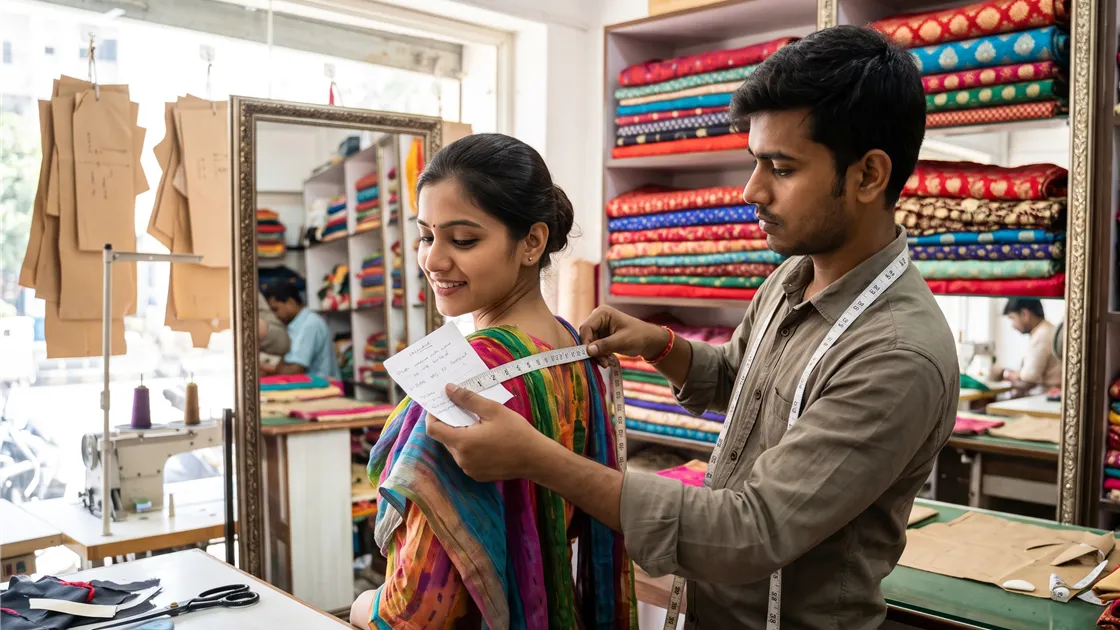
The Alteration Starts at the Counter
When a garment comes back, the shop looks at the stitching first. The seam, the dart, the karigar. Usually the stitching was fine. The karigar cut exactly what was written, and what was written was wrong.
That is good news, because measurement mistakes are the cheapest mistakes in the shop to prevent. Fixing a blouse after it is stitched takes an hour and sometimes cannot be done at all. Catching the error on the order slip takes a minute. The trick is knowing which errors to look for, because they are nearly always the same ones.
Mistakes in Taking the Measurement
Measuring over the wrong clothes
The customer comes in wearing a thick kurta or a sweater, and the bust or chest is taken over it. Or she is measured over a thin top and will wear the blouse over padding. Either way the number is honest and the garment is wrong. Always ask what she will wear underneath, and measure over that or allow for it.
The tape is not level
A bust, chest or hip measurement where the tape rides up at the back reads one to two inches small. It is the commonest single error in the trade, because from the front the tape looks fine. Walk round the customer, or check in the mirror, before reading the number.
The tape is pulled tight
Some tailors pull the tape snug so the garment fits close. That is what ease is for. Take the body measurement as it is, with the tape flat but not pressing, and add the ease separately and deliberately. Mixing the two means nobody knows how much ease the garment actually has.
The customer is not standing naturally
Men pull the stomach in. Women stand up straighter than usual. Arms are held out or bent. Ask the customer to stand as they normally stand, arms down, breathing normally, and wait a moment before reading the tape.
Length agreed in words
"Knee length." "Normal sleeve." "Medium neck." Every one of these means something different to the customer and to the cutter. Agree lengths and depths by pointing at the body, and write the number, not the word.
Mistakes in Writing It Down
Numbers in the wrong box
A waist written in the hip column, a sleeve length written where the sleeve round should be. On a crowded register page it happens more than anyone admits. A printed slip with the same order every time, or a form that asks for each measurement by name, removes most of it.
Halves and quarters lost
Was it 34 or 34 and a half? A quickly written half becomes a smudge, and the karigar guesses. Write fractions clearly, or use decimals, and use the same habit across the shop.
Inches and centimetres mixed
One tailor measures in inches, a new karigar thinks in centimetres, a customer reads her size off a label. A 36 that was meant in centimetres is a disaster. Pick one unit for the shop and write it on every slip.
Old measurements reused without asking
"Same as last time" is a wonderful sentence, but people change. A measurement from two years ago, or before a pregnancy, or before a long illness, can be several inches out. Reuse old numbers only after asking the question, and check one or two key measurements again.
Mistakes in Reading It
Notes the cutter never sees
The customer said she wants the blouse loose, or the trouser worn low on the hip. It was said at the counter and never written down. The cutter cuts to the numbers and the garment comes back. If a preference changes the cut, it belongs on the slip next to the measurements.
Two customers with the same name
Two Priyas, two Rajeshes, one register. The wrong page is opened and the garment is cut to a stranger's body. Always identify customers by name and mobile number, never by name alone.
The Two-Minute Check Before Cutting
Most of these mistakes show themselves if you compare the measurements with each other. Bodies are not random: certain numbers always relate to certain others. Before any garment is cut, run your eye over the slip with these checks.
| Check | What it should look like | What a wrong one suggests |
|---|
Bust or chest against waist | Bust usually larger than waist | Numbers swapped, or tape not level |
Hip against waist | Hip usually larger than waist | Waist taken at the trouser line, or swapped |
Shoulder against bust | In proportion with her other measurements | A misread or a figure from another customer |
Armhole against sleeve round | Armhole always larger than the upper arm | Armhole taken tight or written in the wrong box |
Left side against right side | Both sides recorded alike | A side measured twice, the other guessed |
This order against the last | Close to the previous order unless something changed | Old numbers reused, or a new error |
None of these checks proves a number is right. They catch the ones that are clearly wrong, and those are the ones that bring garments back. A slip that fails a check is a reason to call the customer, not a reason to guess.
Make the Habits Stick
The checks work only if they are done every time, by everyone. A few habits make that easier.
Use one measurement order for each garment and never vary it. The how to take measurements guide sets out a sensible order, and garment charts like the blouse measurement chart show what each measurement means.
Read the measurements back to the customer before she leaves. Saying "bust 36, waist 31, blouse length 14" aloud catches a surprising number of errors, and the customer often corrects one.
Keep measurements where they can be found. Measurements on loose slips or scattered across register pages get lost, mixed up or copied wrongly; storing and finding customer measurements covers a system that works.
And when a garment does come back, note why. After a few months the pattern shows, and it is nearly always one or two of the mistakes above. Our guide on when a customer says it does not fit covers how to handle the conversation itself.
Frequently Asked Questions
What is the most common measurement mistake in tailoring?
A bust, chest or hip measurement taken with the tape not level, usually riding up at the back. It reads small, and the garment comes back tight. Check the tape at the back before reading it.
How can I check measurements before cutting?
Compare them with each other. Bust should usually be larger than waist, hip larger than waist, armhole larger than the upper arm, and a repeat customer's numbers should be close to the last order. A slip that fails a check needs a call to the customer.
Should I reuse a customer's old measurements?
Only after asking whether anything has changed, and after checking one or two key measurements again. Old numbers are a good starting point, not a guarantee.
Should measurements be taken over clothes?
Take them over the clothes or innerwear the customer will actually wear under the garment. Measuring over a thick top, or over thin clothing for a padded blouse, gives honest numbers for the wrong garment.
Where Juvee Helps
Half of these mistakes are mistakes of paper: numbers in the wrong box, old figures reused, two customers with the same name. Juvee keeps each customer's measurements against her name and mobile number, in named fields, with the date and your fit notes, and keeps her earlier orders' figures to hand so a strange number is easy to spot; see measurement management. The Basic plan is free with no time limit, and paid plans start at ₹10,190 a year including GST; the pricing page lists every plan.