Fall and pico is the smallest job in the shop and the easiest to price wrong. Here is how to work out your own rate, and how to tell whether it is paying.
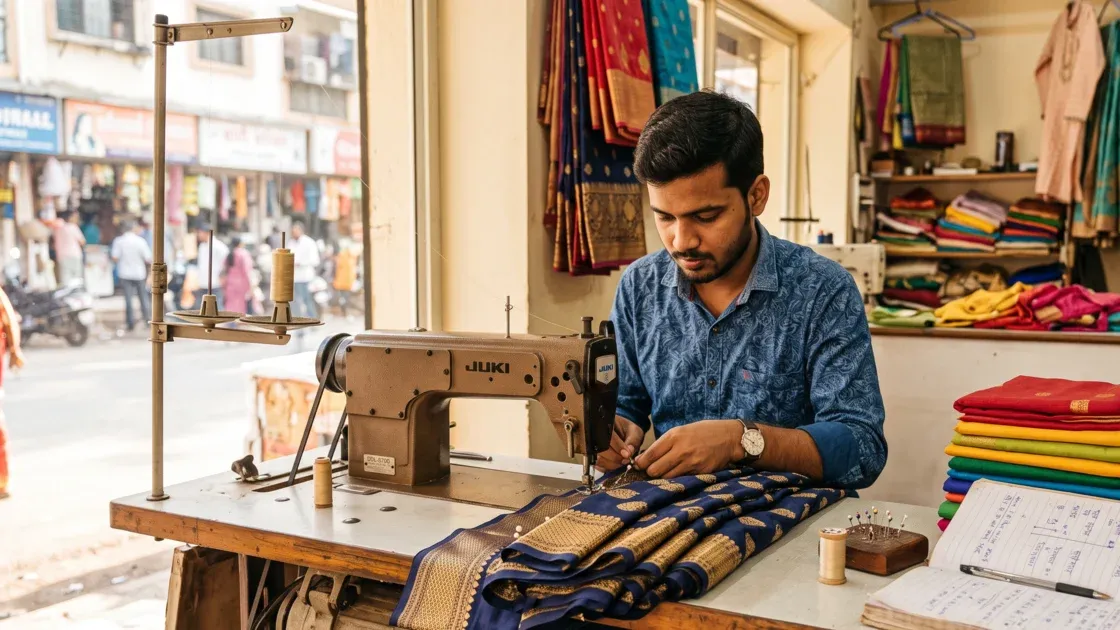
Nobody opens a tailoring shop to stitch falls. It arrives anyway, ten and fifteen at a time before a wedding, and most shops have never worked out what it earns them. The rate is usually whatever the shop next door charges, set some years ago, and never looked at again.
This is not an argument for charging more. It is an argument for knowing.
Why the Rate Is Usually Wrong
Fall and pico gets priced by comparison. Somebody asks, the shop says a number, and that number came from the shop across the road, which got it from somewhere else. It is the one job where a shop will quote a price it has never costed.
That would not matter if it were rare. It is not. In the weeks before a wedding season it can be a third of everything crossing the counter, and a third of your counter time going out at the wrong price is worth knowing about.
Work Out Your Own Number in Ten Minutes
You do not need a spreadsheet. You need one afternoon and a clock.
- Time five of them properly. Not a guess. From the moment the saree comes out of the cover to the moment it is folded and tagged. Include the pinning, the machine time, the trimming, and the fold.
- Add the counter time. Taking it in, writing it down, finding it again when she comes, and taking the money. For a small job this is often longer than the stitching.
- Work out what an hour of your shop costs. Rent, current, your karigar, your own time. Divide by the hours you are actually open. Our post on what it costs to open a tailoring shop sets out the monthly side of that.
- Multiply. Minutes on the job, times the cost of a minute. That is your floor. Anything at or under it is work you are paying to do.
Most shops that do this are surprised twice. The stitching is faster than they thought, and the handling is slower.
The Three Things That Actually Decide the Price
1. Who does it
If the owner stitches falls, the shop is paying its most expensive hour for its cheapest job. If it goes to a junior, the arithmetic changes completely. That is a staffing decision, not a pricing one, and it is the biggest lever you have.
2. Whether the fall is yours
If you supply the fall cloth, that is material and it belongs in the price separately, at what you paid plus the handling. Shops that fold it into one round number lose the material margin quietly, every time the cloth price moves.
3. How many come at once
Ten sarees from one customer at one counter visit is a different job from ten sarees from ten customers. The stitching time is the same; the handling time is not. A rate for a bundle is fair and easy to explain.
Where the Money Actually Leaks
Not in the rate. In the handling.
- Not written down. Small jobs get remembered instead of recorded, and a remembered job is one that can be forgotten, disputed, or delivered without payment.
- No advance. Nobody asks for an advance on a fall. Then it sits on the rack. Our post on garments nobody comes to collect is mostly about exactly this size of job.
- Not on the bill. If a customer brings three blouses and two falls, and the bill shows the blouses, the falls have been given away. It happens more than anyone admits.
- Never counted. At the end of the month nobody knows how many were done, so nobody knows whether the rate is working.
That last one is the whole problem. A shop can tell you its blouse rate to the rupee and has no idea how many falls it stitched last month.
Should You Do It at All?
Yes, and not mainly for the money.
Fall and pico brings a customer to your counter who was not otherwise coming. She is holding a saree. Some of those sarees need a blouse, and a blouse is real work at a real price. Shops that treat fall work as a nuisance are turning away the cheapest introduction they will ever get.
The way to think about it: price it so it does not lose money, handle it so it does not eat your counter, and treat every one of them as somebody who now knows where your shop is. Our post on getting customers to come back is about what happens next.
Put It on the Bill
Whatever you decide, write it down like any other job. A line on the bill, a delivery date, and the amount. Not because a fall needs paperwork, but because a shop that records the small work is the only kind that can tell, at the end of a month, whether the small work is paying.
Our post on what a tailor bill must show covers the line items, and building a rate card covers setting the rest of your prices the same way.
Frequently Asked Questions
How much should I charge for saree fall and pico?
There is no national rate, and any article that gives you one is guessing. Time five jobs from counter to counter, work out what a minute of your shop costs, and multiply. That number is your floor; what you charge above it depends on your area and your speed.
How long does fall and pico take?
Time your own. Shops that measure it usually find the machine work is quicker than they assumed and the taking-in and handing-back is slower. Both halves belong in the price.
Should the fall cloth be charged separately?
If you supply it, yes. Keep the material and the labour as separate figures, even if you quote one total. Otherwise you will not notice when the cloth price moves.
Is fall and pico work worth doing for a small shop?
Usually yes, as long as it is priced above cost and does not swallow the counter. Its real value is that it brings somebody holding a saree into your shop, and sarees need blouses.
Why do small jobs get missed on the bill?
Because they are remembered rather than written. A blouse gets an entry; two falls get a nod. Recording every job the same way, however small, is the only fix that holds.
Count Them for One Month
Before changing your rate, do one thing: count. Every fall, every pico, for one month, written down like any other order.
At the end of it you will know how many you did, what they earned, and how much counter time they took. That is the whole decision, and you cannot make it from memory. Juvee’s free Basic plan handles 20 orders a month at no cost, which is enough to count a month of small work and see what it is telling you.