When someone nearby searches "tailor near me", Google shows a map with three shops on it. A Google Business Profile is how a tailoring shop gets onto that map, and it costs nothing. Here is how to set one up properly, what to fill in, and the habits that keep it working.
Why It Matters More Than a Website
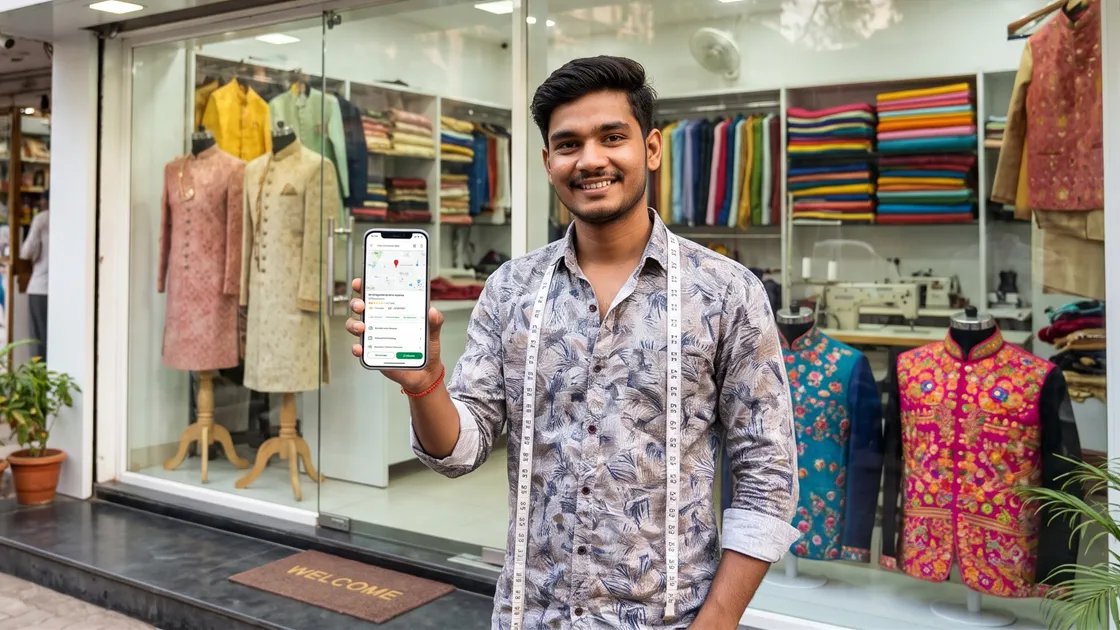
Most people looking for a tailor are not reading websites. They are standing somewhere, phone in hand, searching for a tailor, a blouse stitching shop or an alteration shop close by. Google answers with a map and a short list of businesses, each with its stars, its distance, its timings and a button to call or get directions.
That list is built from Google Business Profiles. A shop without one is not on it at all, however good its work. A shop with a half-filled profile appears below the ones that took ten more minutes. And a shop with a complete, active profile with recent reviews often appears above older, bigger shops that never bothered.
For a small tailoring shop, it is the single most useful thing on the internet, and it is free.
Setting It Up
Search for Google Business Profile, sign in with a Google account the shop will keep, and add the business. Use an email that belongs to the shop or the owner, not to a karigar or a relative who might leave. Losing access to the account is the commonest way a shop loses its profile.
Before you start, check whether your shop already appears on Google Maps. Customers or Google itself sometimes create a listing. If it exists, claim it rather than making a second one; two listings for the same shop split the reviews and confuse everyone.
Google then asks you to verify that you really run the business at that address. The method varies, and Google decides which ones to offer: commonly a short video showing the shopfront, the signboard and the inside of the shop, sometimes a phone call or a code by post. Have the signboard visible and the shop open when you do it, because a verification that shows only a closed shutter is often rejected.
What to Fill In
Name
The name on your signboard, exactly. Do not add words like "best tailor" or your phone number to the name. It looks like a shortcut and Google can suspend profiles that do it.
Category
Choose "Tailor" as the main category. Then add the others that are genuinely true of your shop, such as clothing alteration service or boutique. The categories decide which searches you can appear in, so a shop that does alterations but does not list them is invisible to people searching for alterations.
Address and service area
The real shop address, with the pin placed on the actual shopfront, not the middle of the road. If you also take orders at customers' homes, add the areas you cover. A home-based tailor who does not want the home address shown can hide it and list a service area instead.
Hours
Correct hours, including the weekly holiday and the lunch break if you close for one. Update them for festival holidays. A customer who drives over because Google said open and finds the shutter down does not come back, and may leave a review about it.
Phone and WhatsApp
A number that is answered during shop hours. If most of your customers message rather than call, make sure the number has WhatsApp; our guide to WhatsApp for tailor shops covers how to handle the messages that start arriving.
Description
A few plain sentences: what you stitch, who for, and what you are known for. "Ladies and gents tailoring, blouse and bridal work, alterations while you wait." Write it the way a customer would describe you, using the words they would search for.
Services and prices
List your main services. Prices are optional, but a starting price for a blouse or a trouser hem answers the first question most customers have and brings in the ones who are comfortable with it.
Photos Do Most of the Work
People choose a tailor with their eyes. A profile with a dozen good photos gets far more calls and direction requests than one with a single blurry shot of the shutter.
Start with these: the shopfront with the signboard, in daylight, so people can find you. The inside of the shop, clean and bright. And above all, your finished work: blouses, salwars, kurtas, suits, bridal pieces, each photographed against a plain background in good light.
Then keep adding. One or two new photos of finished work every week tell Google the business is active, and tell customers you are busy. Ask before you photograph a customer wearing the garment, and never post one without permission.
Reviews: Ask at the Right Moment
Reviews are what customers read first and what Google weighs heavily when it decides which shops to show. The shops with many recent reviews tend to be the shops at the top.
The right moment to ask is when the customer is happiest: at collection, when she has tried the garment on and liked it. Ask in person, then send the review link on WhatsApp the same day, while she still remembers. A link sent a week later is ignored.
Reply to every review, good and bad, politely and briefly. A calm, polite reply to an unhappy review, offering to put it right, often does more for the shop than ten good ones, because every future customer reads it. Never offer discounts in return for reviews, and never write them yourself or have relatives write them. Google removes fake reviews and can penalise the profile.
Keep It Alive
A profile is not set up once and forgotten. The ones that stay at the top of the map are the ones that change.
Post an update now and then: a new festival collection, the date you stop taking orders before a festival, a new service. Answer the questions people ask on the profile. Keep the hours right. And look at the profile's own figures every month, how many people called, asked for directions or visited the website, so you know whether it is working.
These steps sit well with the rest of your local marketing; our guide on how to get customers for a tailoring business puts them alongside referrals, WhatsApp status and society groups. If you are still choosing the shop itself, where to open a tailoring shop covers why visibility from the street and the map both matter.
Frequently Asked Questions
Is Google Business Profile free for a tailoring shop?
Yes. Creating and running a Google Business Profile costs nothing. Google only charges if you choose to run ads, which are separate and optional.
Which category should a tailor choose on Google?
"Tailor" as the main category, then any others that are genuinely true of the shop, such as clothing alteration service or boutique. The categories decide which searches the shop can appear in.
How do I get my tailoring shop to the top of Google Maps?
There is no trick. Distance from the person searching matters most, and you cannot change it. What you can change is a complete profile, the right categories, regular photos of finished work, correct hours and a steady flow of genuine reviews with replies.
Can a home tailor have a Google Business Profile?
Yes. A home-based tailor can hide the home address and show a service area instead, listing the localities where orders are taken or delivered.
Where Juvee Helps
A Google profile brings new customers in. Keeping them depends on what happens next: their measurements saved, their dates kept and a message when the garment is ready, which is also the moment to ask for that review. Juvee keeps every customer's details, orders and history in one place; see customer records. The Basic plan is free with no time limit, and paid plans start at ₹10,190 a year including GST; the pricing page lists every plan.