A princess cut blouse has no darts. The shaping is done by curved seams that run over the bust, and if those seams miss the bust point by even half an inch, the whole blouse looks wrong. Here are the princess cut blouse measurements, how the panels are cut, and the five faults that bring it back.
What Makes a Princess Cut Different
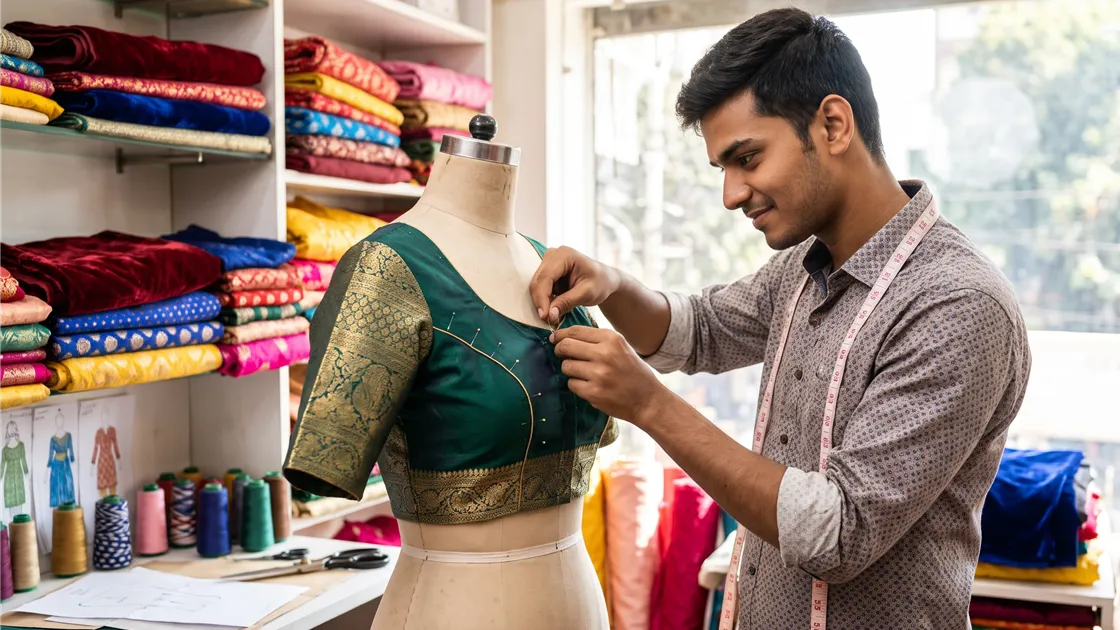
An ordinary blouse is shaped with darts: folds stitched into the fabric that take in the extra cloth under and beside the bust. A princess cut blouse does the same job with seams instead. The front is cut in separate panels, and the curved seams joining them run from the armhole or the shoulder, over the bust point, and down to the waist.
Done well, it is the best-fitting blouse a tailor can make. It follows the body closely without the puckering a dart can leave, it holds padding neatly, and it looks clean from the front because there are no dart points showing.
Done badly, it is the most obvious failure in the trade. A dart that sits slightly off can be hidden. A princess seam that runs beside the bust instead of over it cannot, because the seam itself is the shaping, and the shape is in the wrong place.
That is why the princess cut needs two measurements more carefully taken than any other blouse: where the bust point is, and how far apart the two are.
Princess Cut Blouse Measurements
Take the full set from the blouse measurement chart as usual. For a princess cut, three of them carry the fit, and they are worth taking twice.
| Measurement | Where the tape goes | Why it matters here |
|---|
Shoulder to apex | From the shoulder point, near the neck, straight down to the bust point | Decides how high the seam crosses the bust |
Apex to apex | Straight across from one bust point to the other | Decides how far apart the two seams sit |
Under-bust | Round the ribcage just below the bust | The seams finish into this line, so it must be snug |
Bust | Round the fullest part, tape level | The panel widths are divided from this |
Front length | Shoulder point down the front to the bottom of the blouse | Sets how long the panel seams run |
Armhole | Round the top of the arm, two fingers loose | Armhole princess seams start here, so it must be right |
Waist | Round the bottom of the blouse | The seams end here, and the panels must close cleanly |
Take the bust point measurements over the innerwear or padding she will actually wear with the blouse. A padded blouse and an unpadded one put the bust point in different places, and a princess seam will show the difference immediately.
Armhole Princess or Shoulder Princess
There are two ways to run the seam, and the customer should choose before you cut.
Armhole princess: the seam starts in the curve of the armhole, sweeps over the bust point and runs down to the waist. It is the more common choice for saree blouses, it is easier to fit on a fuller bust, and it leaves the shoulder line clean for a deep or wide neck.
Shoulder princess: the seam starts at the middle of the shoulder and runs straight down over the bust. It looks longer and more structured, and it suits a high or boat neck well, but it shows every error in the bust point, because the line is straight and the eye follows it.
If she has no preference, the armhole princess is the safer choice for a first order.
Cutting the Panels
The front is cut in four pieces for a front-opening blouse, two centre panels and two side panels, or in three for a back-opening one, with one centre panel. The back can be cut with ordinary darts or with princess seams of its own; most customers will not notice the difference at the back, and darts are quicker.
Mark the bust point on the pattern before anything else, from the shoulder-to-apex and apex-to-apex measurements. Then draw the seam line through it. Every other line on the front follows from that one, so if the bust point is marked wrong, nothing after it can be right.
Cut the curves with seam allowance of at least half an inch, more on a fabric that frays. The curved edges stretch as soon as they are handled, so stay-stitch them, a line of plain stitching just inside the seam line, before they are joined.
When joining, the side panel curve and the centre panel curve are different shapes. They do not lie flat against each other, and they are not meant to. Match the notches, pin at the bust point first, and ease the fuller curve onto the flatter one. Clip the seam allowance on the inner curve after stitching so it lies flat when pressed.
If you are making your own patterns rather than drafting each one fresh, the pattern making guide covers how to keep a set of princess blocks by size so you are adjusting a tested pattern rather than starting again.
Fabrics That Suit It
Princess cut blouses work best in fabrics that hold their shape: silk, cotton silk, brocade, raw silk and firm cottons. The seams give them structure, and they press crisp.
Be careful with large prints and bold checks. The seams cut straight through the pattern, and unless you have the cloth and the patience to match it across every panel, the print will break across the bust. Small prints and plain fabrics are much safer.
Thin, slippery fabrics such as georgette and chiffon can be cut princess, but they need a firm lining to carry the shape. Without one, the seams pull and ripple. A lined princess blouse is also the cleanest way to hold padding in place, which our guide on blouse padding, cups and linings covers in detail.
The Five Faults That Bring It Back
The seam runs beside the bust
The bust point was measured over the wrong innerwear, or marked from the wrong shoulder point. Fix it before cutting: check the mark against her at the first fitting, with a pin.
Puckering along the curve
The curves were not stay-stitched and stretched while being handled, or the allowance was not clipped. Stay-stitch every curve before joining.
A pointed cone at the bust
The curve was cut too sharp for her shape. A rounder bust needs a gentler curve on the side panel. Ease it out at the trial rather than pressing it flat.
Gaping at the armhole
The armhole princess seam was started too high in the armhole, or the armhole was cut loose to make the join easier. Keep the armhole to her measurement and start the seam lower.
The panels do not close at the waist
The under-bust and waist were taken loose, or the panel widths were not divided evenly from the bust. Check the total of the panel widths against the waist before cutting.
What to Charge
A princess cut blouse takes noticeably longer than a darted one: more pieces to cut, curves to stay-stitch and ease, and usually a lining. Price that time. Most shops charge more for a princess cut than for a plain blouse, and customers who ask for one expect to. Write the style on the order and the rate card so it is never quoted as a plain blouse by mistake; the blouse order checklist has a line for it.
Frequently Asked Questions
What is a princess cut blouse?
A blouse shaped by curved seams that run from the armhole or shoulder over the bust point to the waist, instead of by darts. It fits closely and looks clean from the front, but only if the seams cross the bust point exactly.
What measurements are needed for a princess cut blouse?
The usual blouse measurements, with three taken extra carefully: shoulder to apex, apex to apex and under-bust. They decide where the seams sit, and they should be taken over the innerwear she will wear with the blouse.
Which is better, armhole princess or shoulder princess?
The armhole princess is more common for saree blouses, easier to fit on a fuller bust and better with a deep neck. The shoulder princess looks longer and more structured, and suits a high or boat neck.
Why does a princess cut blouse pucker at the seam?
Usually because the curved edges stretched before they were joined. Stay-stitch every curve first, ease the fuller curve onto the flatter one, and clip the inner curve after stitching.
Where Juvee Helps
A princess cut lives or dies on two numbers that most registers do not even have a column for. Juvee keeps every customer's blouse measurements against her name, with the shoulder to apex and apex to apex, the style she chose and a note about the padding, so the next princess blouse starts from what fitted the last one; see Juvee for ladies tailor shops. The Basic plan is free with no time limit, and paid plans start at ₹10,190 a year including GST; the pricing page lists every plan.