Uniform work is measured once and cut two hundred times. Here is the chart, the sizes to start from, and the checks that stop a whole batch going wrong.
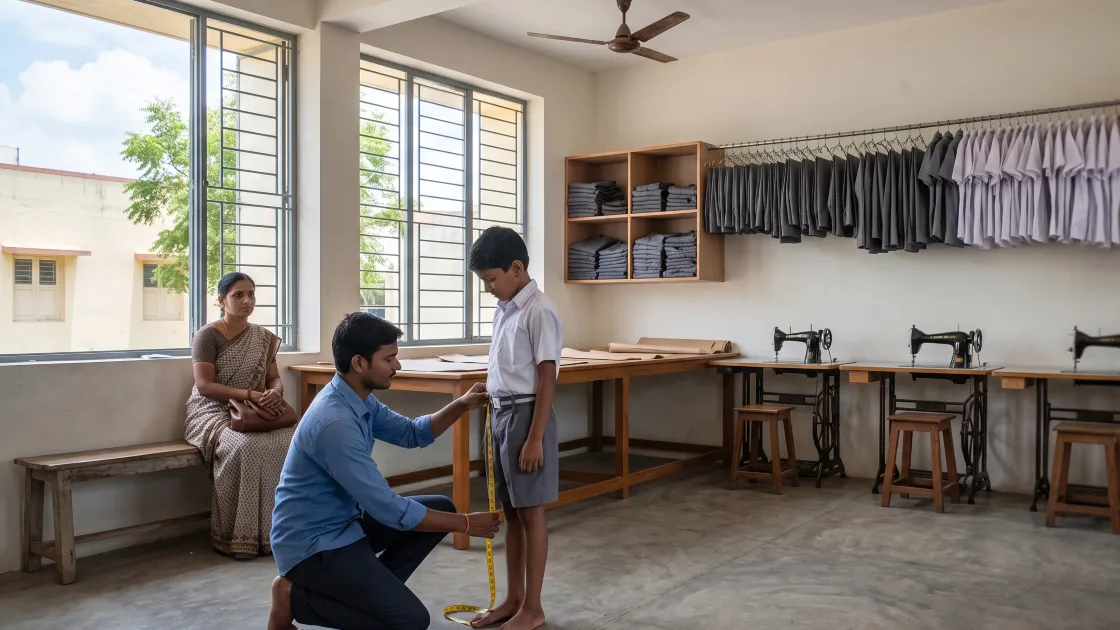
Uniform Work Is a Different Job
A wedding blouse is one garment for one body. A uniform order is two hundred garments across forty bodies, cut to a size chart, delivered in one week, and paid for by a school that will notice every complaint.
That changes what matters. On a single order the risk is a bad fitting. On a uniform order the risk is a bad size chart, because one wrong number is not one wrong garment - it is every garment in that size.
Measure a sample child in every size band before cutting the batch. Twenty minutes there saves the whole order.
Shirt and Blouse
| Measurement | Where the tape goes | What goes wrong |
|---|
Length | Shoulder neck point straight down the front | Cut to look right today, too short by December |
Chest | Round the fullest part, under the arms, tape level | Taken snug. A uniform needs room to grow into |
Shoulder | Across the back, seam point to seam point | Measured across the front, which reads shorter |
Sleeve, full | Shoulder point down the outside of the arm to the wrist | Arm bent while measuring |
Sleeve, half | Shoulder point down to mid upper arm | No agreed end point, so no two match |
Neck | Round the base of the neck with two fingers under the tape | Taken tight, and the top button never closes |
Armhole | Round the arm at the shoulder joint | Tight armholes are the single most common uniform complaint |
Trousers and Shorts
| Measurement | Where the tape goes | What goes wrong |
|---|
Waist | Round the body where the trouser will sit | No elastic or adjuster allowance, so it fits for one term |
Seat | Round the fullest part of the hip | Taken too high, so the seat is tight |
Length | From the waist line down the side to the ankle | Measured without shoes |
Thigh | Round the fullest part, just below the crotch | Taken mid-thigh, which reads small |
Knee | Round the leg at the knee | Left out, so the taper is guessed |
Bottom | Round the leg at the hem | Not agreed with the school |
Crotch | Seated, from the waist line at the side down to the seat | Skipped. The commonest cause of a child being uncomfortable all day |
Pinafore, Skirt and Tunic
- Length, from the shoulder or the waist depending on the style the school has set
- Chest and waist, taken loose - these are worn over a shirt
- Hip, for anything that is not fully pleated
- Pleat depth and pleat count, which the school usually fixes and which must be written down
- Shoulder strap length for a pinafore, adjustable if the school allows it
A Starting Size Chart, Not a Cutting Guide
Use this to plan the batch and to order fabric. Do not cut from it. Children of the same age differ by more than any chart can hold, and a school with a mixed intake will break it.
| Age | Chest, in | Waist, in | Shirt length, in | Trouser length, in |
|---|
4 to 5 | 22 to 23 | 21 to 22 | 17 to 18 | 21 to 23 |
6 to 7 | 24 to 25 | 22 to 23 | 19 to 20 | 24 to 26 |
8 to 9 | 26 to 27 | 23 to 24 | 21 to 22 | 27 to 29 |
10 to 11 | 28 to 30 | 24 to 26 | 23 to 24 | 30 to 32 |
12 to 13 | 31 to 33 | 26 to 28 | 25 to 26 | 33 to 35 |
14 to 15 | 34 to 36 | 28 to 30 | 27 to 28 | 36 to 38 |
16 to 17 | 36 to 38 | 30 to 32 | 28 to 29 | 38 to 40 |
Every school will have children above and below these bands. Ask the school for the actual list before you order fabric, and add an outsize allowance for the ones who fall outside it.
The Six Checks That Save a Uniform Order
- Get the school’s specification in writing - colour, fabric, pleat count, badge position, and who supplies the badge.
- Cut one full sample garment in each size band and have it tried on before the batch is cut.
- Agree the growth allowance with the school, not with each parent, and apply it the same way to every garment.
- Number the sizes on your own labels. A pile of forty shirts with no size marking is a day lost sorting them.
- Record which child is which size, so next year is a top-up and not a fresh survey.
- Fix the delivery date against the school reopening date, and build in a week for the alterations that always come.
Where Uniform Shops Lose Money
Take a shop cutting three hundred uniform garments. If five per cent come back for alteration, that is fifteen garments unpicked and restitched inside the same week the rest are due.
Almost none of that is skill. It is the armhole cut to today’s measurement with no growth allowance, the crotch nobody measured, and last year’s size list that was never written down anywhere it could be found again.
Frequently Asked Questions
What measurements are needed for a school uniform?
For a shirt: length, chest, shoulder, sleeve, neck and armhole. For trousers: waist, seat, length, thigh, knee, bottom and crotch. For a pinafore or skirt, add pleat depth and pleat count.
How much growth allowance should a uniform have?
Enough that it still fits at the end of the year, agreed with the school so every garment is treated the same. Deciding it child by child is how a batch ends up inconsistent.
Can I cut a uniform batch from an age chart alone?
No. Use a chart to plan fabric and sizes, then measure a sample child in each band and cut a trial garment before committing the batch.
How do I handle children who fall outside the chart?
Ask the school for those names in advance and measure them individually. Every intake has a few, and finding out at delivery is the expensive way.
How do I make next year easier?
Keep this year’s size list against the school, with each child’s name and size. Next year becomes a top-up order rather than a fresh survey of two hundred children.
Keep the Size List Where You Can Find It
A chart is half the job. The other half is that this year’s list is still there next April. In Juvee, the measurements are saved against the customer, so:
- Next year’s order pulls this year’s sizes back, with the date they were taken
- The school is one customer with many garments, not two hundred loose slips
- The counter phone and the shop computer show the same list
- Job cards tell you which karigar has which part of the batch
For uniform work generally, see software for school uniform manufacturers.
And the guide to school uniform manufacturing.
For the gents side, see the shirt and pant measurement chart.
For storing measurements, see measurement management for tailors.
Try It on One Real Batch
Print this chart, or keep it open on the counter phone, and use it on the next uniform enquiry. The measurements you find yourself guessing at are the ones the alterations will come from.
You can explore the free Basic plan.
The Basic plan stays free, so there is no deadline to decide by.
The Other Measurement Charts
One chart per garment, each with the measurements to take, the ease to allow and the points that are easiest to get wrong.